A Day Trip to Stonehenge, Bath and Lacock

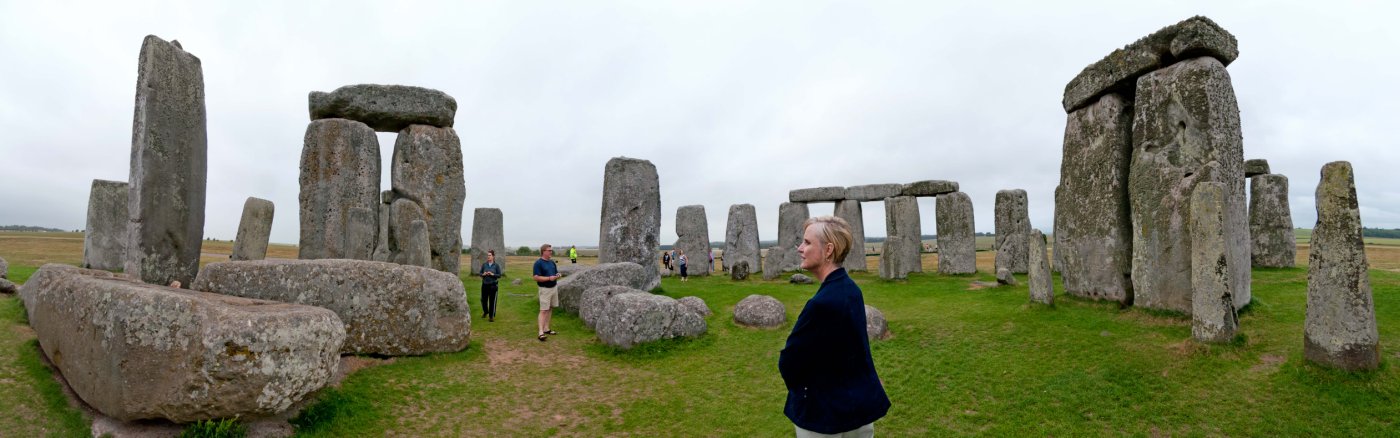
Inside Stonehenge (Photo by P. Corkery)

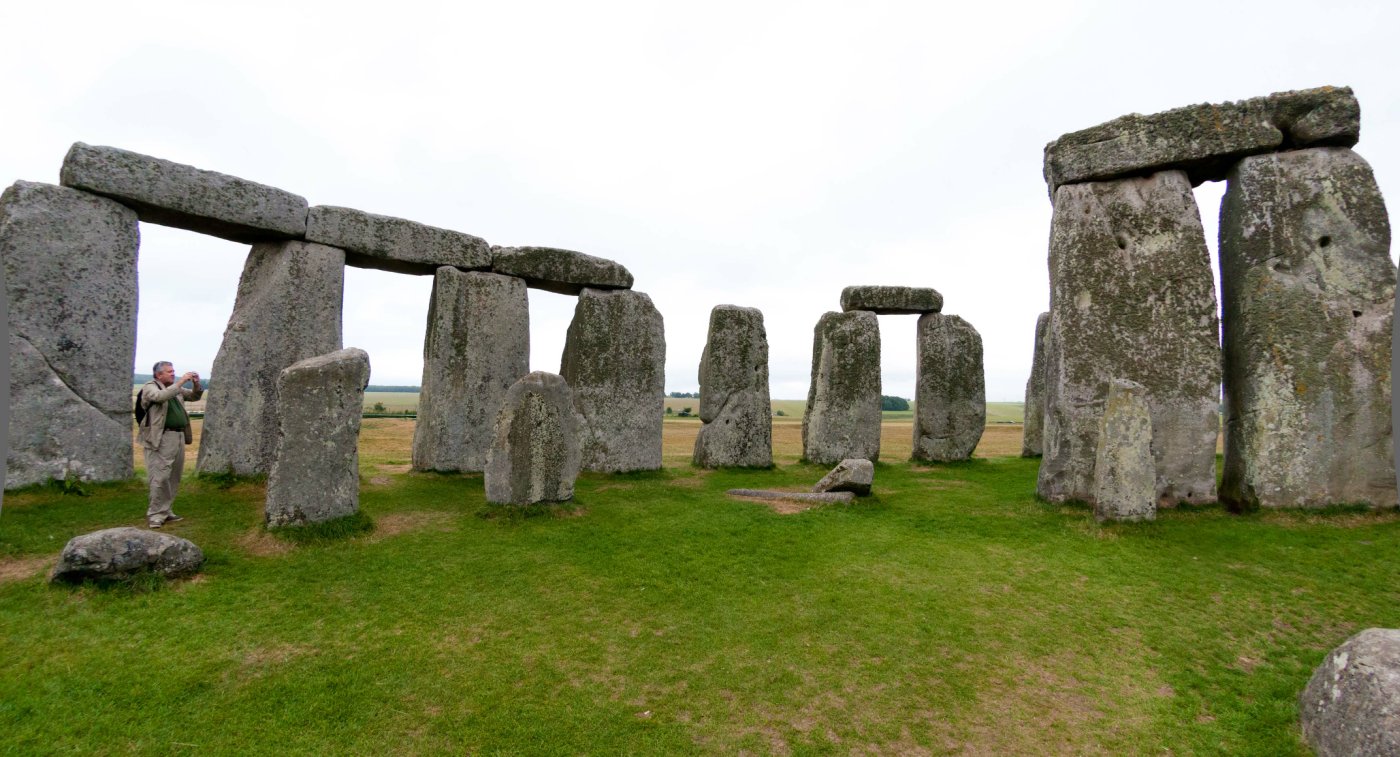
Inside Stonehenge (Photo by P. Corkery)

Stonehenge is a prehistoric site dating back to the Neolithic Period. It is a UNESCO World Heritage site full of mystery and spirituality. Stonehenge is the remains of monolithic stones that were raised as far back as 3,000 B.C. Some theories have Stonehenge built as a burial ground, a place of worship or a place of healing. It is certain, though, that Stonehenge was built with the sun in mind. During the Summer Solstice the stones align with the sun, and during the Winter Solstice the stones align with the sunset. These two special days are still celebrated at Stonehenge.

Stonehenge

Stonehenge (Photo by M. Corkery)

Some days, especially in England, the weather won’t cooperate. We were supposed to view Stonehenge at sunset, and I’m sure it was…on the other side of the clouds. It was the 4th of July, chilly and wet, typical English weather.

stonehenge 3

Within the Circle (Photo by M. Corkery)

We spent an enchanting hour or so within Stonehenge. When you make your arrangements to go, make sure you’re able to go within the circle. Not all tours can guarantee that. We chose Viator who offered a sunrise or sunset visit. We chose the sunset time and also toured Bath and the charming village town of Lacock in the Cotswolds.

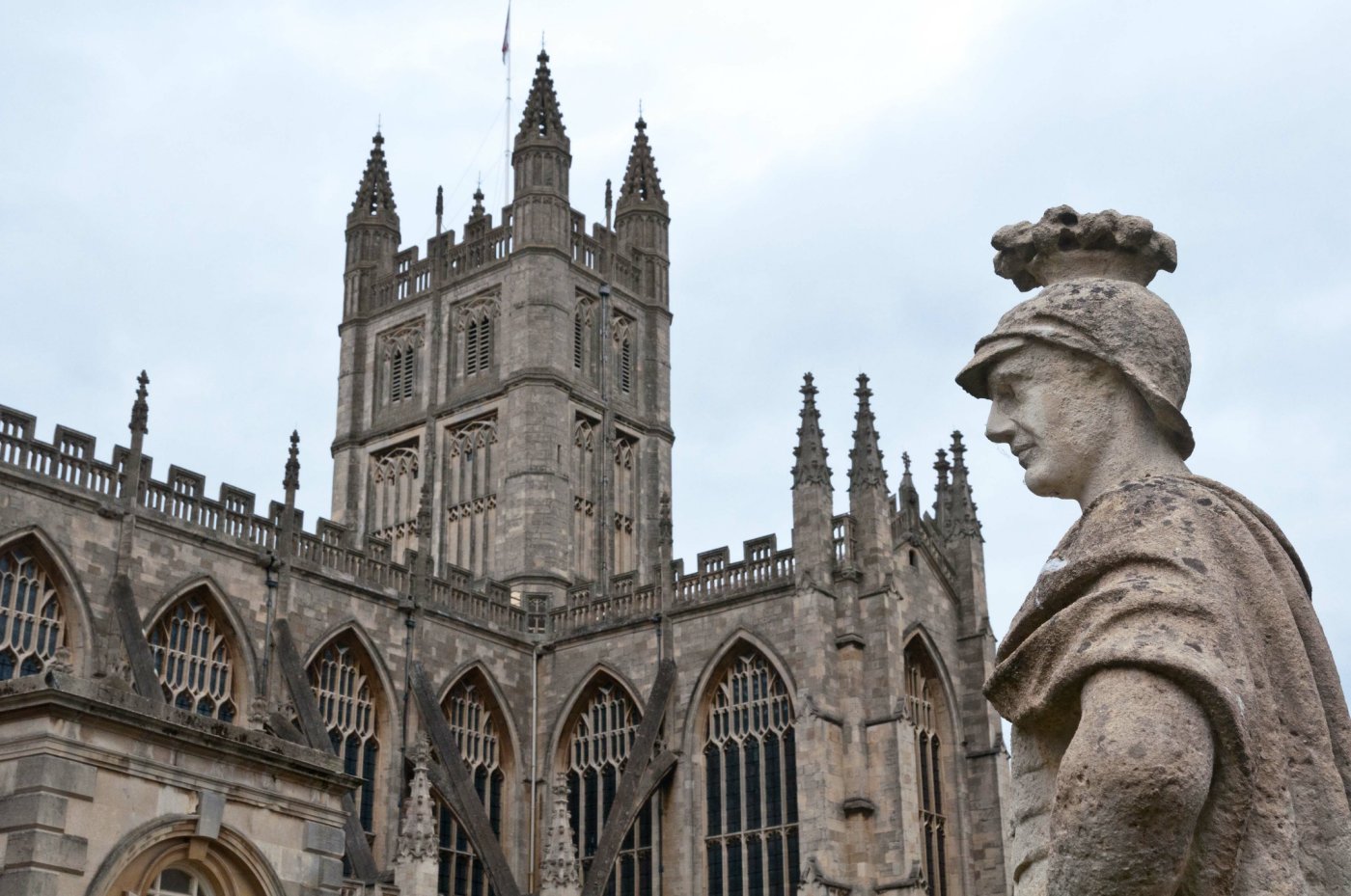
Statue of a Roman Guard looking over the baths

Statue of a Roman Guard looking over the baths (Photo by P. Corkery)

The Roman Baths

The Roman Baths (Photo by P. Corkery)

Bath, 97 miles from London, is also a UNESCO World Heritage site. Upon learning of the curative values in the many hot springs in the area, in AD 67, the Romans built public baths (see previous two pictures).  During the Georgian era, Bath was very popular. Even today, vacations can be planned around the hot springs, though not the one used in Roman times and pictured above.

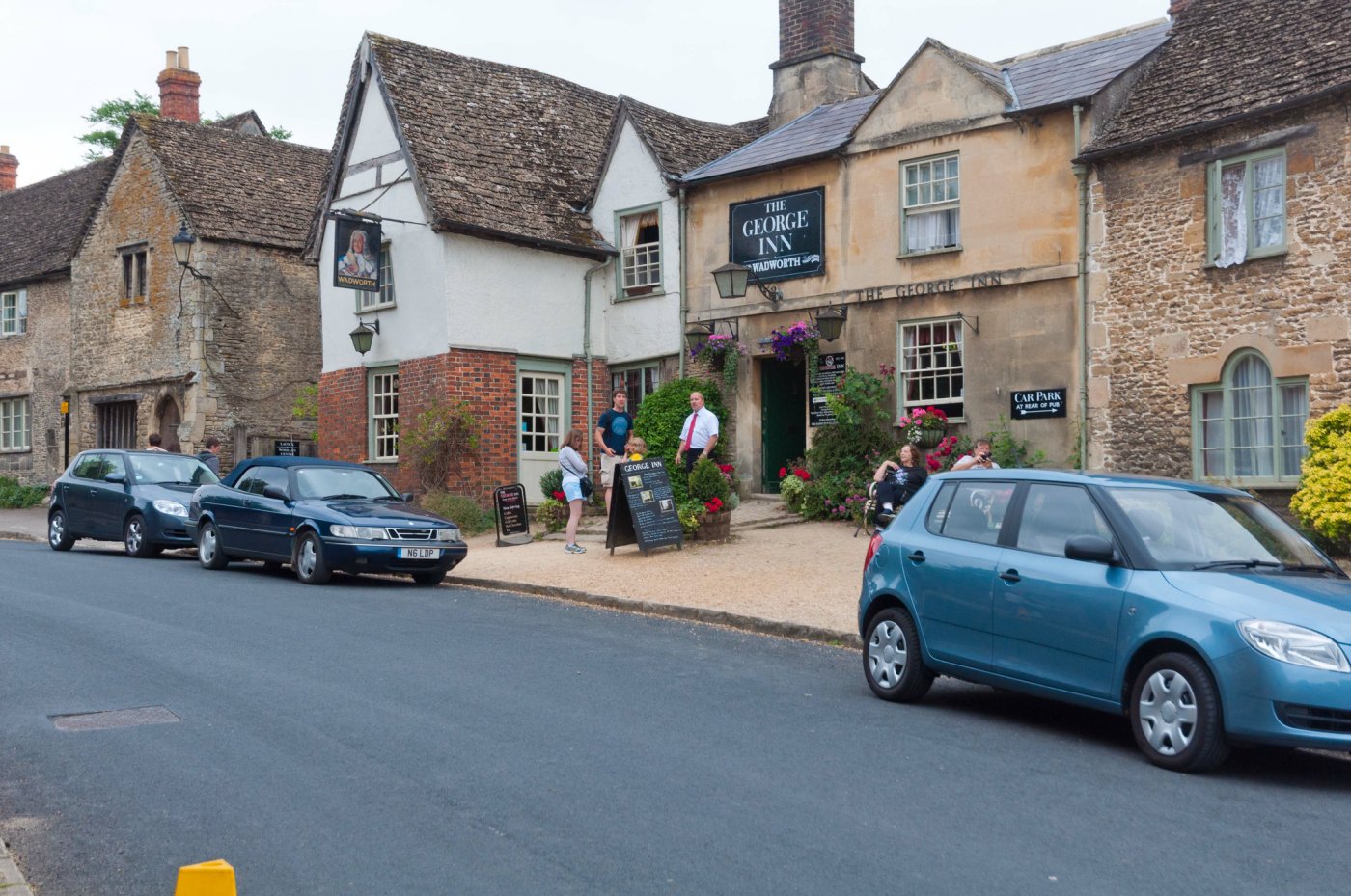
Lacock in the Cotswalds

Lacock in the Cotswolds (Photo by M. Corkery)

We ended our day excursion with a meal at the George Inn in the village of Lacock. Lacock dates to the 13th century. It’s a picturesque town that has been featured in tv shows and movies. Scenes were shot at the Lacock Abby, most recently, for Harry Potter films.

If you’re spending time in London, take the time to see the surrounding areas. I recommend Viator and their tour that lets you into the inner circle at Stonehenge.

The Acropolis

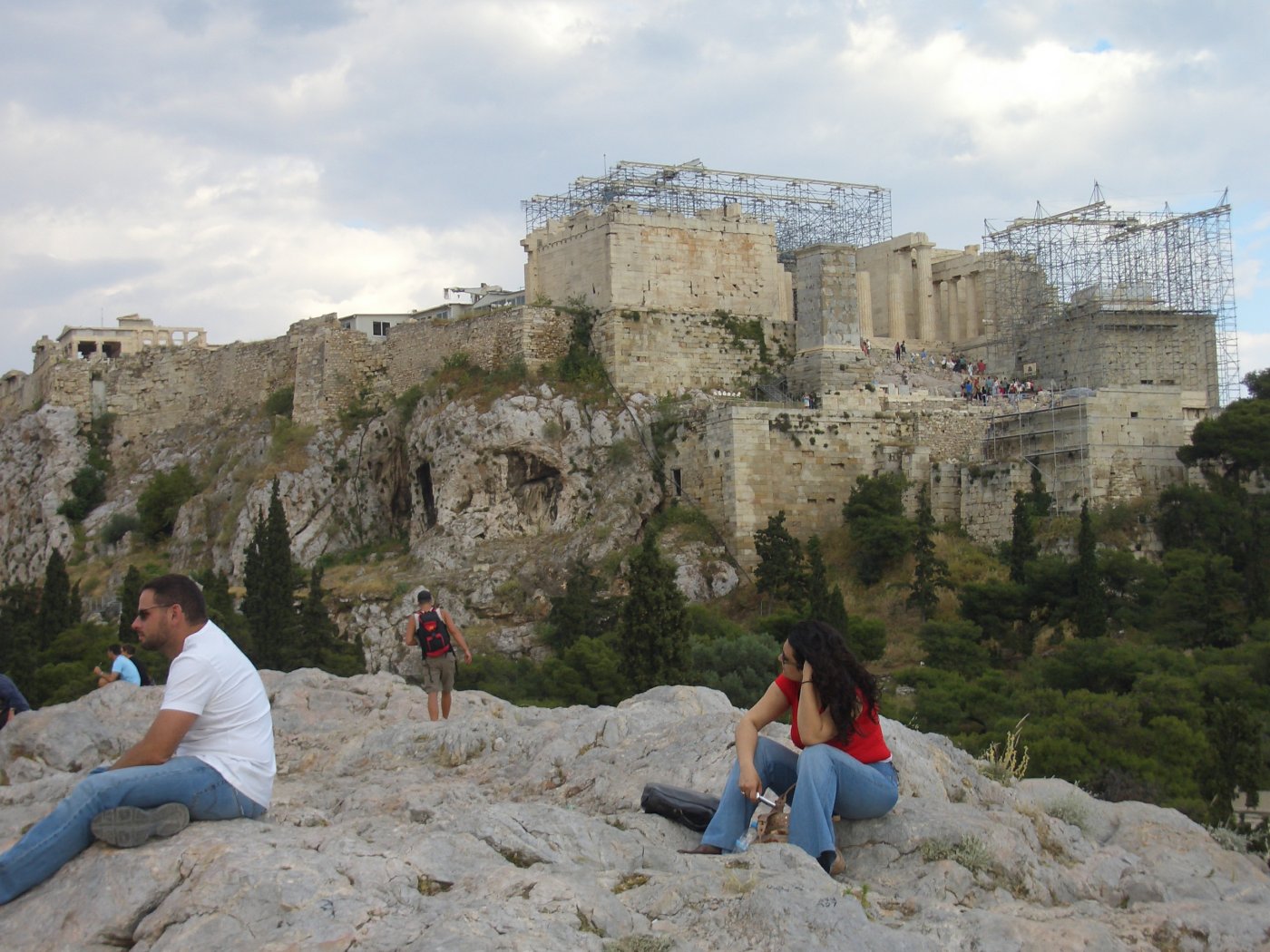
The Acropolis was a citadel high on a hill in ancient Athens, Greece. If you have time for only one activity while visiting Athens, the Acropolis should be at the top of your list.

Tough Climb

First View of the Acropolis (Photo by M. Corkery)

Don’t let the view up at the Acropolis scare you.  It won’t be the easiest flight of stairs you’ve ever taken, but far from the most difficult. Take care when choosing which side you enter from. If you take the entrance nearest the Acropolis metro station, you start from the higher altitude and in general walk on a relatively more gentle slope. You can stop and rest if you feel tired, turn around and enjoy the view.   If you enter from the Monastiraki square side, you enter through the Agora, which culturally is interesting, but is absolutely exhausting, though shorter. I’ve done both climbs and recommend the first climb, first thing in the morning. The crowds will be smaller, and if its summer the heat won’t be too bad.

Acropolis 2

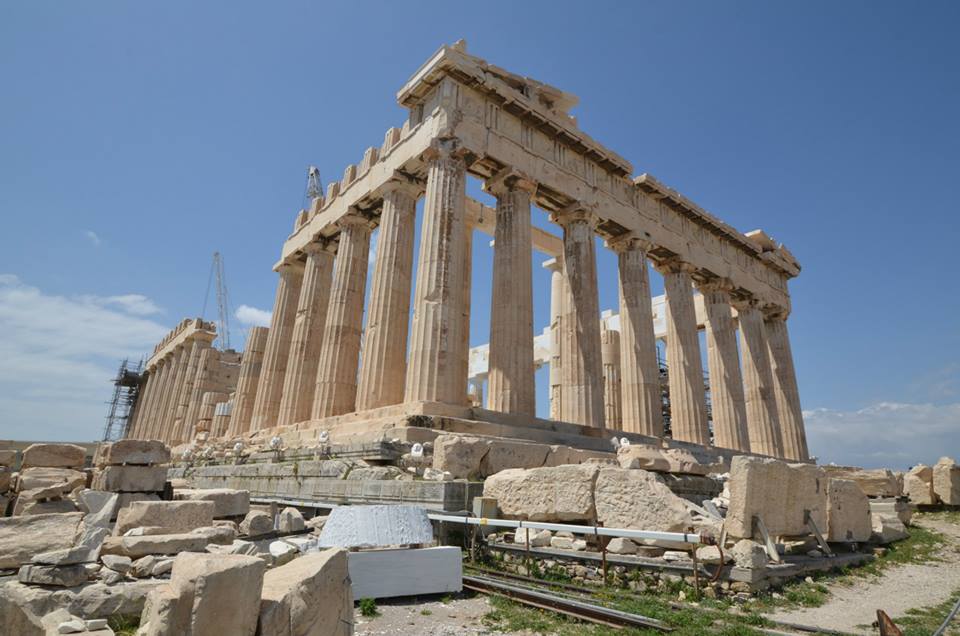
The Parthenon (Photo by P. Corkery)

Once you’ve made the climb to the top of the Acropolis you’ll walk right up to the Parthenon, which was the temple dedicated to the Goddess Athena, for whom Athens was named. Construction began in 447 B.C. It is the enduring symbol of ancient Greece.

The Acropolis

The Acropolis (Photo by P. Corkery)

Acropolis looking up

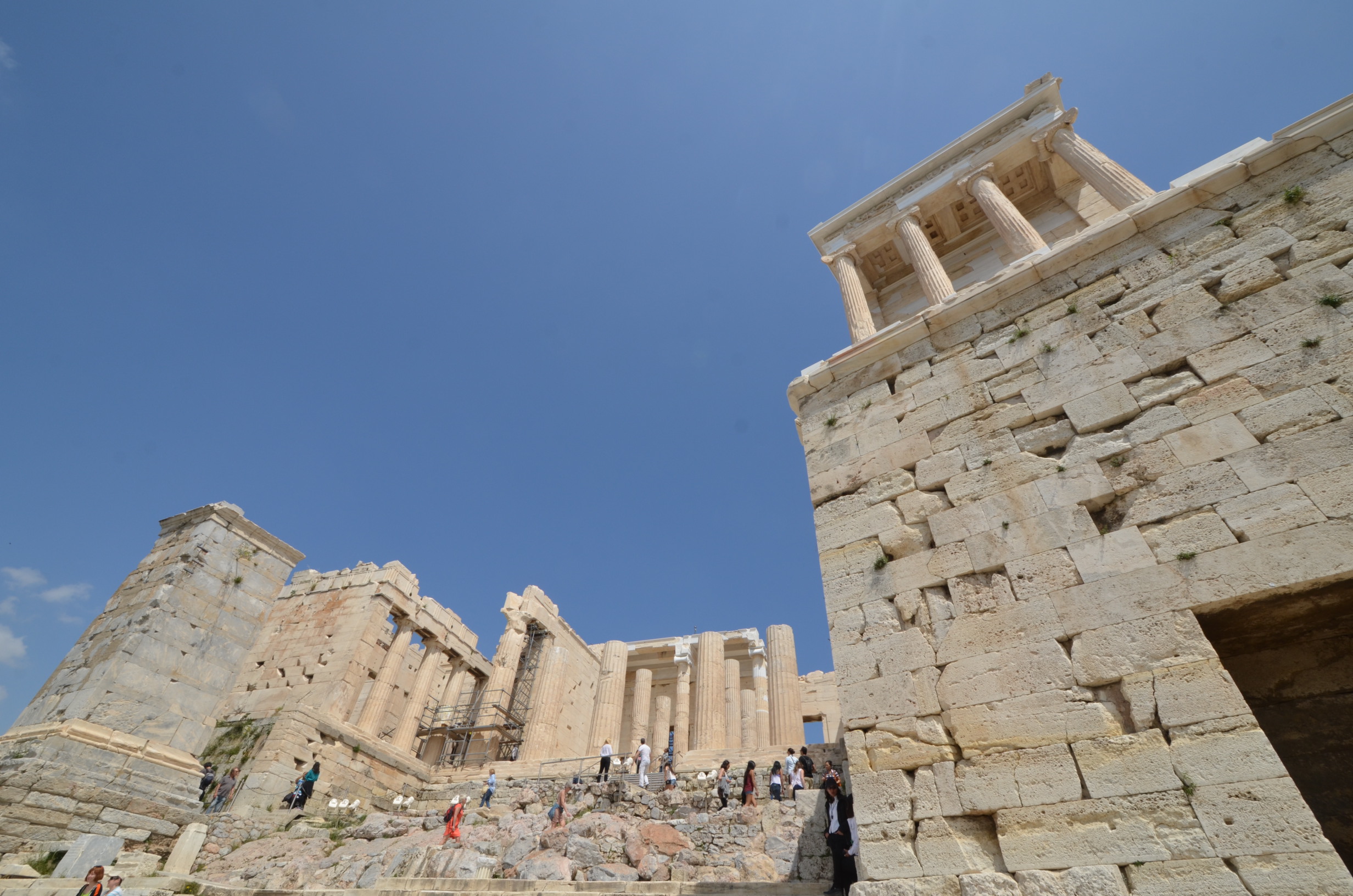
Last Stairway up to the Acropolis (Photo by P. Corkery)

The Caryatids

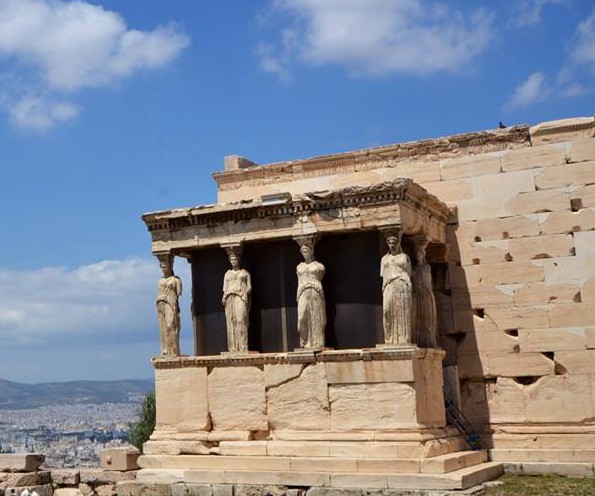
The Caryatids (Photo by M. Corkery)

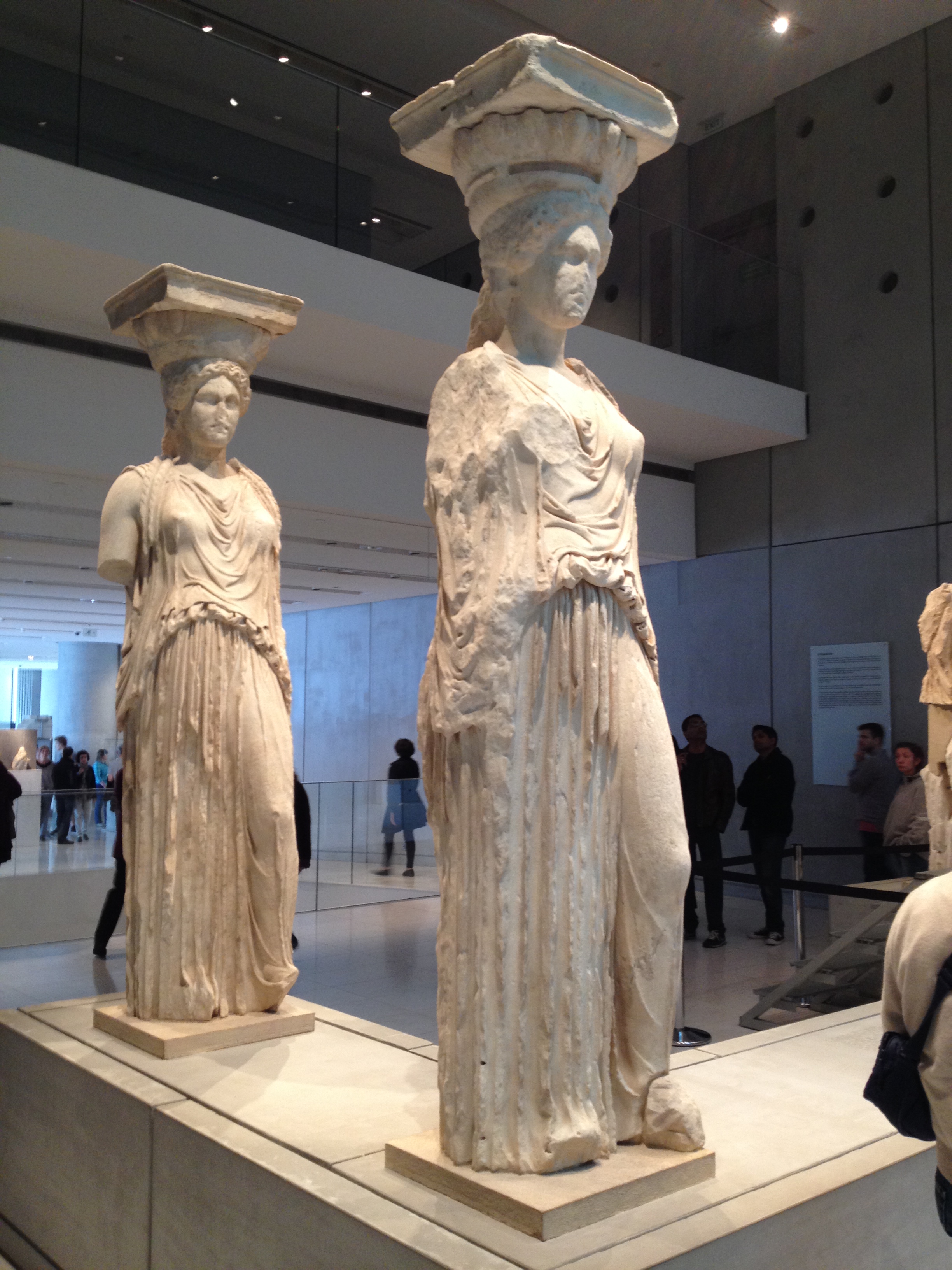
The sculpted female figures holding up the portico in the above picture are called the Caryatids. These five are not the original marble sculptures. They were removed to the Acropolis Museum in the late 1970s for safe keeping. The sixth one was appropriated by Lord Elgin along with many other original marble sculptures between 1801-1805. The British Museum now have them on display. At the time Lord Elgin took them, the Acropolis was in ruin and this was seen as a rescue.

Caryatids in the Acropolis Museum

Original Caryatids in the Acropolis Museum (Photo by P. Corkery)

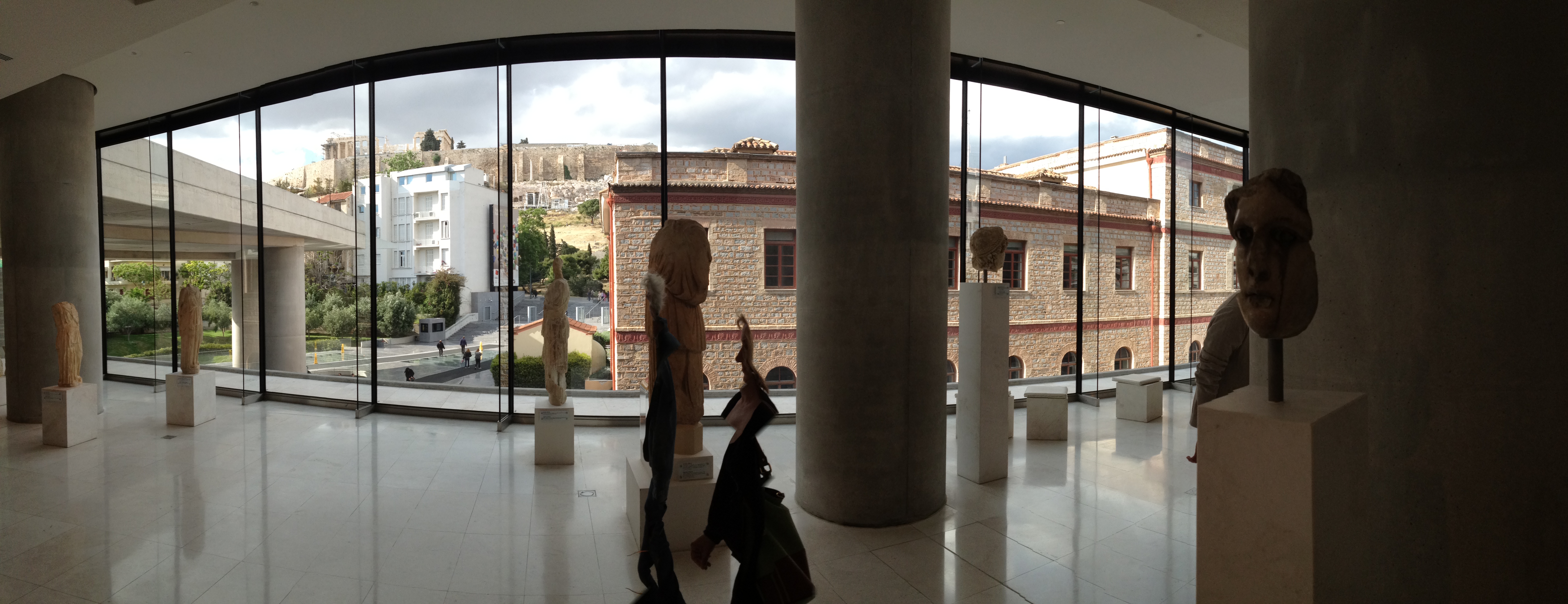
Greece now has a new museum to house its precious treasures. A new and improved Acropolis Museum opened to the public in 2009. It’s time for the British Museum to return the Elgin Marbles to their true home, Greece. There is an international effort to put pressure on The British Museum to do this. Bring home the Parthenon Marbles.

View of the Acropolis from the Window of the Acropolic Museum

View of the Acropolis from the Window of the Acropolis Museum (Photo by P. Corkery)

I recommended Free Tours of Athens if you’d like to take a walking tour of the city. This is an approximately three-hour tip based walking tour. The English-speaking guides are knowledgable and entertaining.

Delos & Mykanos in the Cycladic Islands

Delos

Delos is known as the birthplace of Apollo and his sister Artemis, but it has been an important spiritual center since the third millennium B.C. It is an uninhabited (except for some working French archaeologists) island overflowing with the ruins of Greek, Roman and Egyptian temples to the gods. You can only arrange a day visit, as there are no hotels on the island. We took a boat out of Paros, spending time on Delos and on Mykonos. As you exit the boat, you’ll find a cadre of official tour guides speaking the major languages willing to assist you for a slight charge. Since Patrick, my husband, is a photographer, we chose to wander the island by ourselves. Following are some of his pictures. I’ll let them speak for themselves.

A Temple in Ruins, Delos

A temple in ruins, Delos Greece (Photo by P. Corkery)

The Terrace of the Lions in Delos

The Terrace of the Lions in Delos, Greece (Photo by P. Corkery)

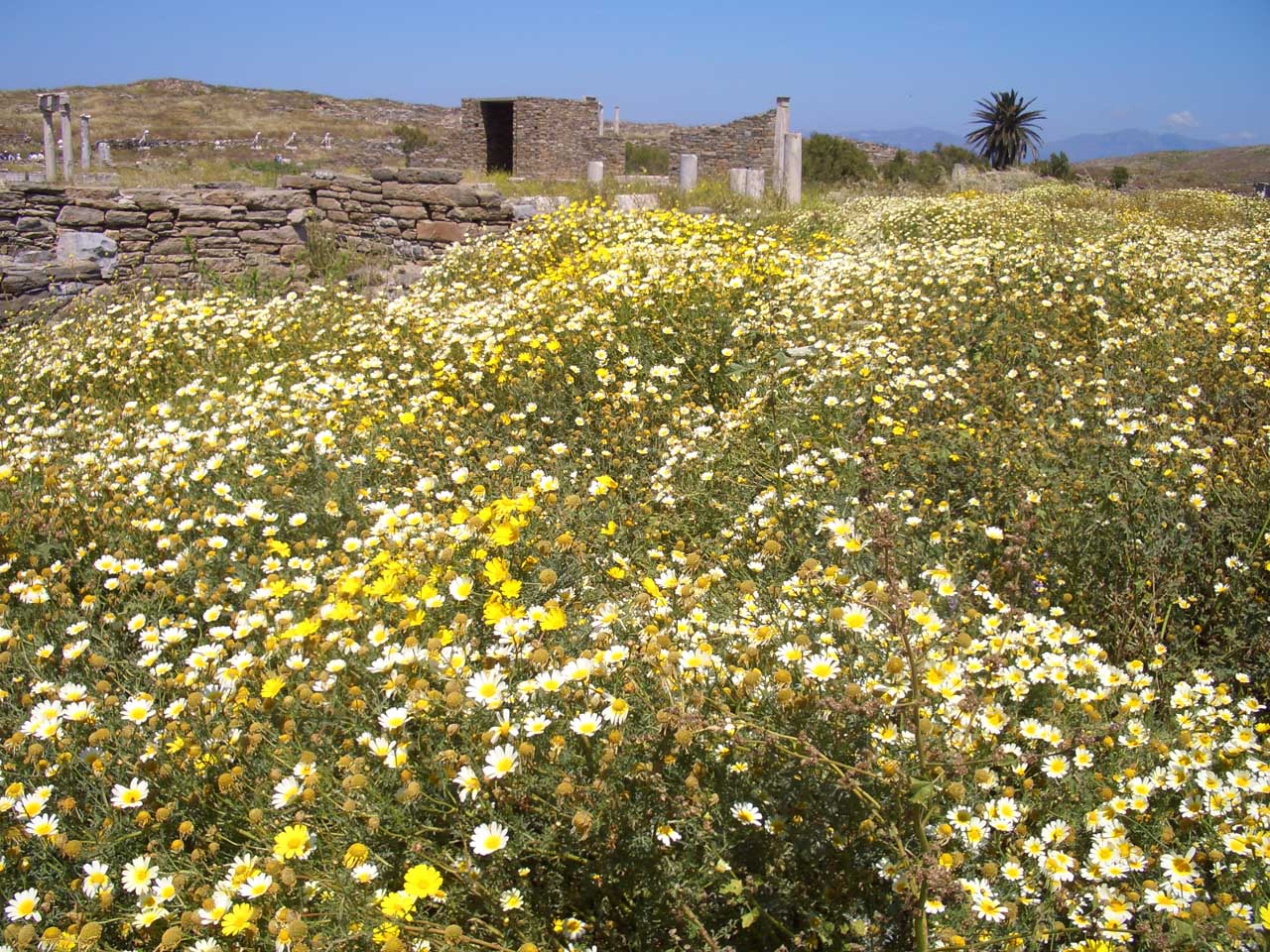
Wildflowers on Delos

Wildflowers on Delos, Greece (Photo by P. Corkery)

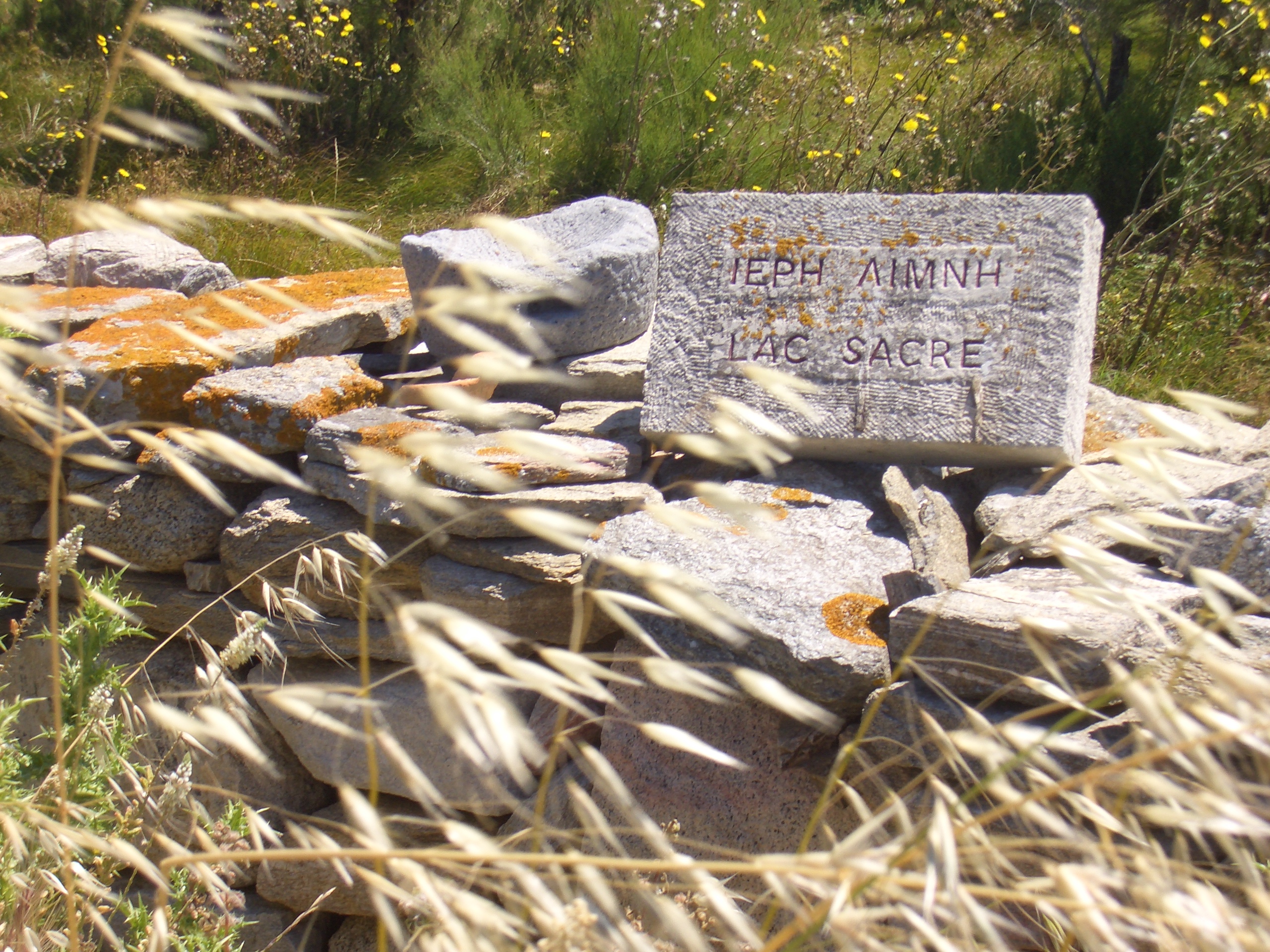
Delos, Greece

The Inscription Reads Sacred Lake in Greek and French – Delos, Greece (Photo by P. Corkery)

Temple Ruin at Delos (Photo by P. Corkery)

Mykonos

Mykonos is known as the party island of the Cyclades and attracts celebrities and young people from around the world. We only spent a few hours here.

Petros the Pelican of Mykanos (Photo by P. Corery)

Petros the pelican is the mascot of Mykonos. He’ll pose for pictures as he walks around the town. There is always a second Petros being groomed to take over when the other becomes too old.

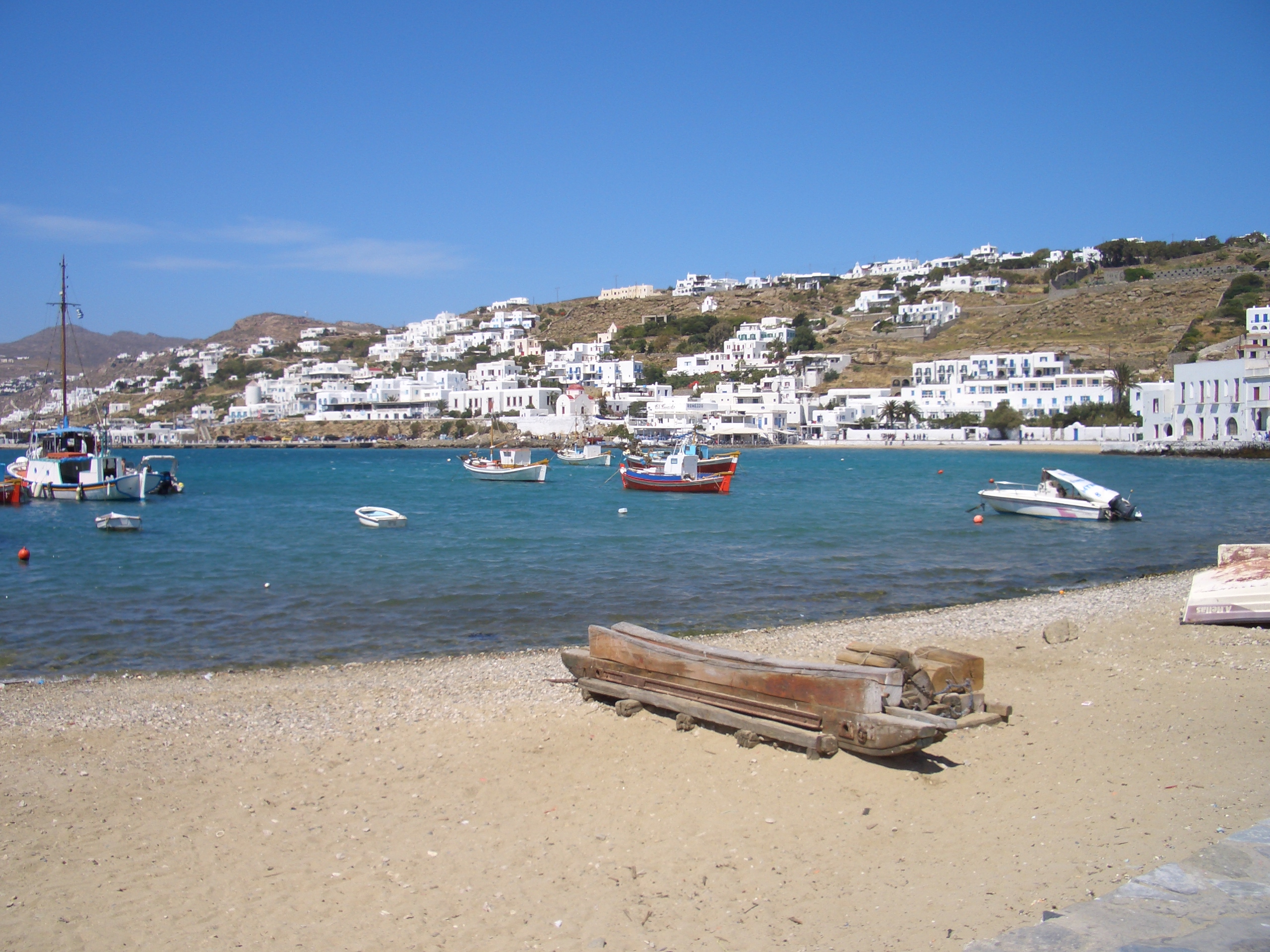
The Port/Beach at Mykanos (Photo by P. Corkery)

Easter on Paros

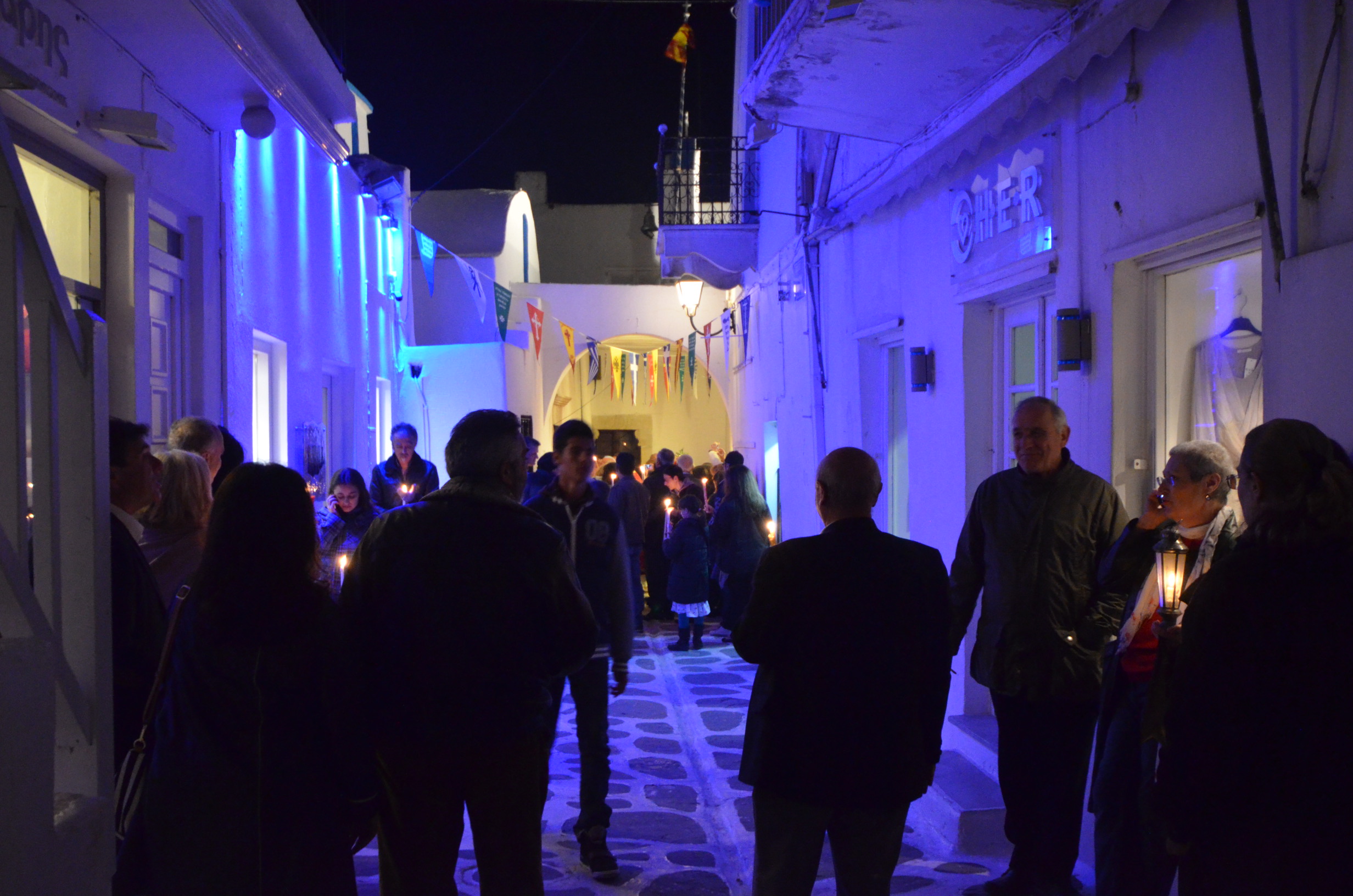
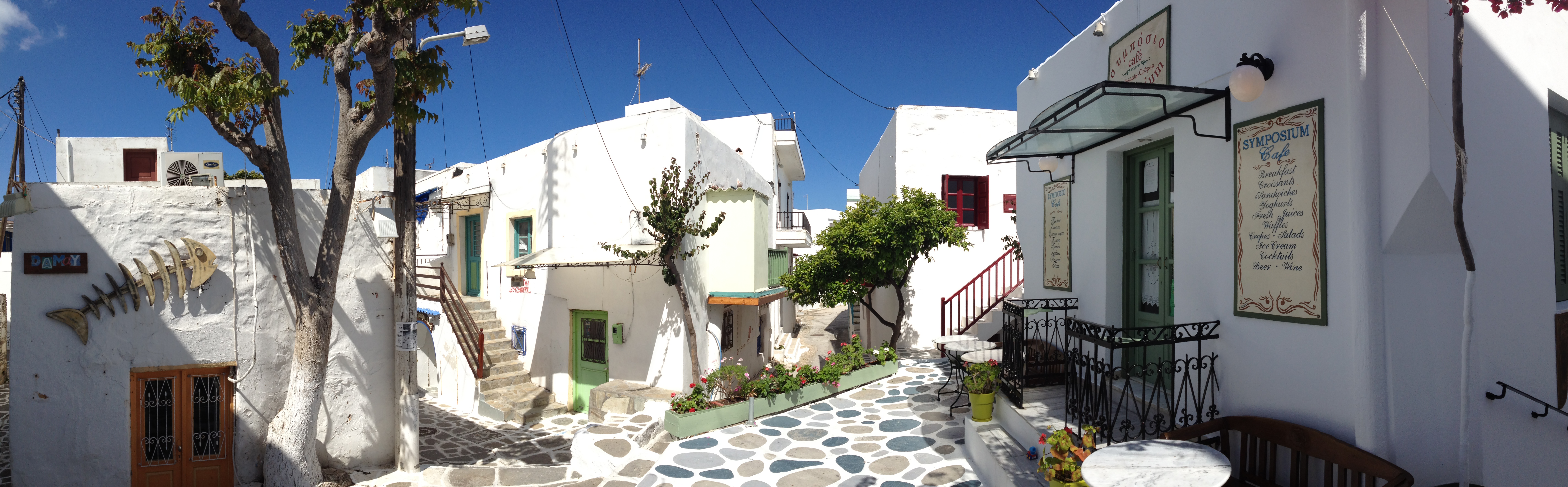
The Streets of Parikia at Easter

The Streets of Parikia at Easter

Following is my Podcast on Easter in Greece. Click and Enjoy!

Every church bell on the island of Paros tolls the Resurrection. The ships in port blare their horns as fireworks light up the sky over the sea. It’s midnight, Easter Sunday morning in Greece and the narrow streets of Parikia, the capital of Paros, are teaming with people. Christos Anesti (Christ is Risen) is the standard greeting answered with Alithos Anesti (Truly He is).

Earlier in the day we had each been given an unlit ribbon-adorned candle as we exited the small commuter plane from Athens. Upon checking into our room over looking the square of Parikia we found two more candles.

Later that night through our open window we heard a deep male voice chanting in Greek. Mesmerized we joined the throngs in the narrow streets winding towards the Panagia Ekatonapyliani, or Church of 100 Doors. This church was founded by Alexander’s mother, Helen, and built by him in 328. It’s the last standing church in Greece built in the Byzantine style. The legend states that only 99 doors have been found, but when the 100th one is uncovered, Istanbul will once again be called Constantinople and ruled by Greece. As we followed behind, we saw old friends and family members greeting each other with joyful voices. Many kisses and hugs were exchanged. We were told later that Easter is the most important religious holiday in Greece, and that family members scattered throughout Greece and Europe will travel to be home at this time. We sat on a bench in front of an old church listening to the chanting from within, happy voices outside, with many people coming and going. As it neared midnight we went off in search of our daughter Kat and her friends. And then the bells began. There was no fear of waking sleeping children, as the whole town, indeed the entire island population was out. As we neared a smaller Church, we saw the priests outside with the congregation around them. A few came up to light their long tapers, and as they began walking through the streets they would stop to light other’s candles. Greeting each other with Christos Anesti.

The streets were soon alive with happy voices and bobbing candlelight. Many families gathered after the services to break their fast with a soup made from the inner organs of the lamb to be roasted the next day, while we headed back for some sleep.

Sunday afternoon we joined a mixed group of local Greeks and other nationalities sharing a large table at Magaya, a beach taverna, for a day of eating, drinking, and celebrating. All over Greece goats and lambs had been roasting, and it was no different here. The aroma filled the air. The wine flowed freely and plates were heaped high. We felt very blessed to share the day and have this “backdoor” experience within the Greek culture.

Paros & Santorini in the Cycladic Islands

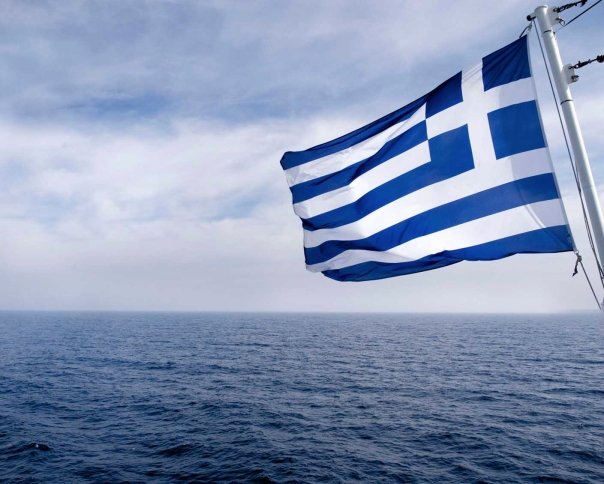
Greek Flag Flying from the back of a Blue Star Ferry

Greek Flag Flying from the back of a Blue Star Ferry (Photo by P. Corkery)

The Cycladic Islands are a group of 220 islands in the Aegean Sea southeast of mainland Greece. This blog post features Paros and Santorini. Because of the economic situation in Greece, it’s a good time to visit and get the most for your dollar. The Euro is lower than it has been for years, and there are good deals to be found. I think you’ll find our pictures enough to lure you.

Many have asked me about eating and drinking in the Greek Isles and all I can answer is, YES! I prefer to dine at the various tavernas that line the shore. They are usually family run and will treat you like one of the family as soon as you sit. The olive oil is often from a family farm, the feta will be fresh and made on the island and the produce grown nearby. Plates are often set in the middle of the table to be shared with others. The wines are almost always from Greek wineries, stored in wooden kegs and served to you in a chilled metal pitcher to insure that even on the warmest days your white wine will be cool. If you’re a beer drinker I recommend Mythos or Alpha, two very nice Greek beers.

The most interesting way to travel to these islands is from a ferry out of Athens, but if you are short of time you can fly inexpensively through Aegean Air on a small commuter plane.

A note of caution about bathroom facilities on the islands. The plumbing is smaller than American standards, and for that reason toilet paper must not be flushed. A small covered trashcan is kept next to the toilet to drop your wrapped up used paper in and is disposed of daily. After a week of this I like to reward myself with a stay at a luxury hotel in Athens just for the bathroom.

Paros

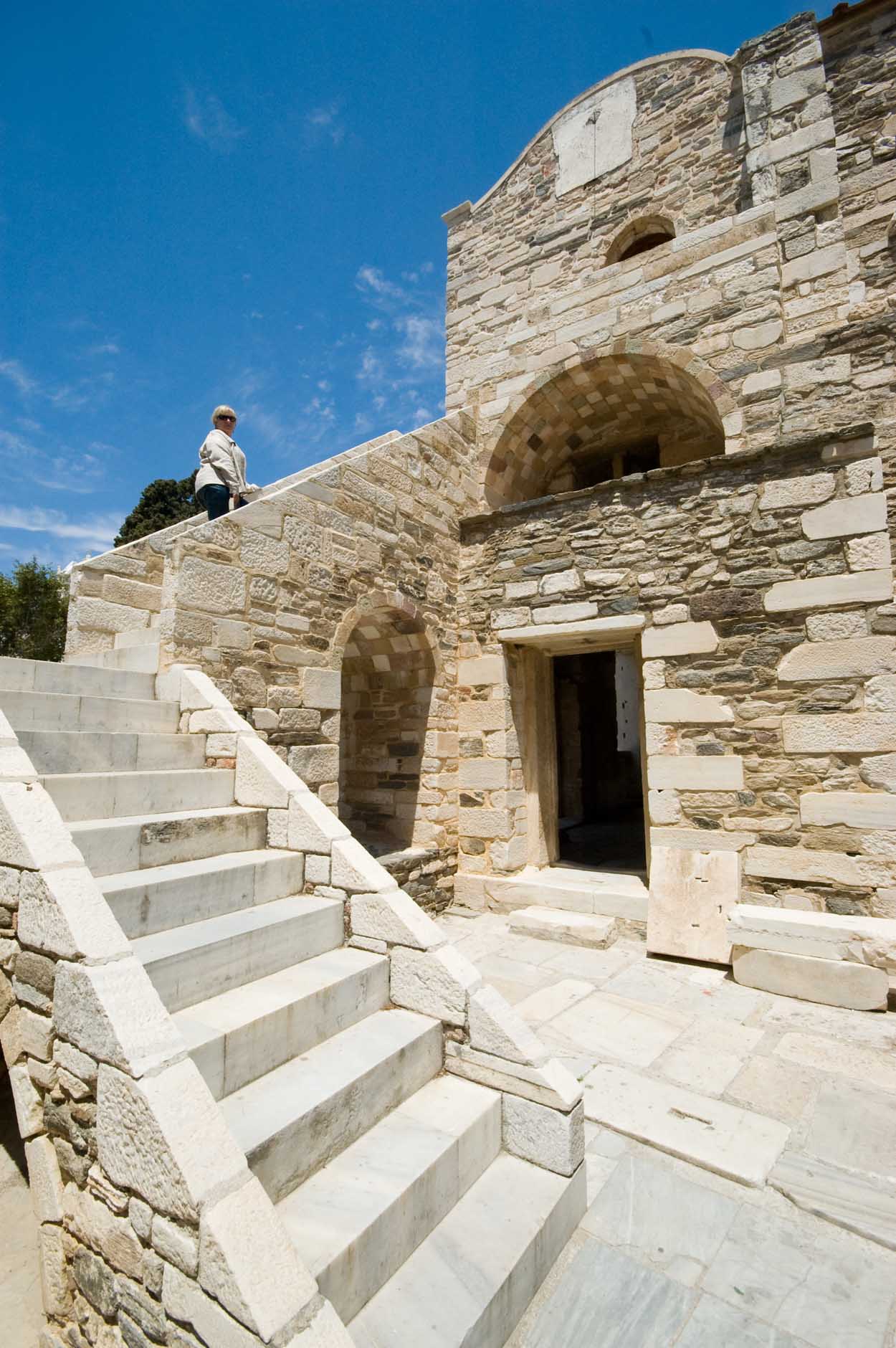
Church of 100 Doors (Photo by P. Corkery)

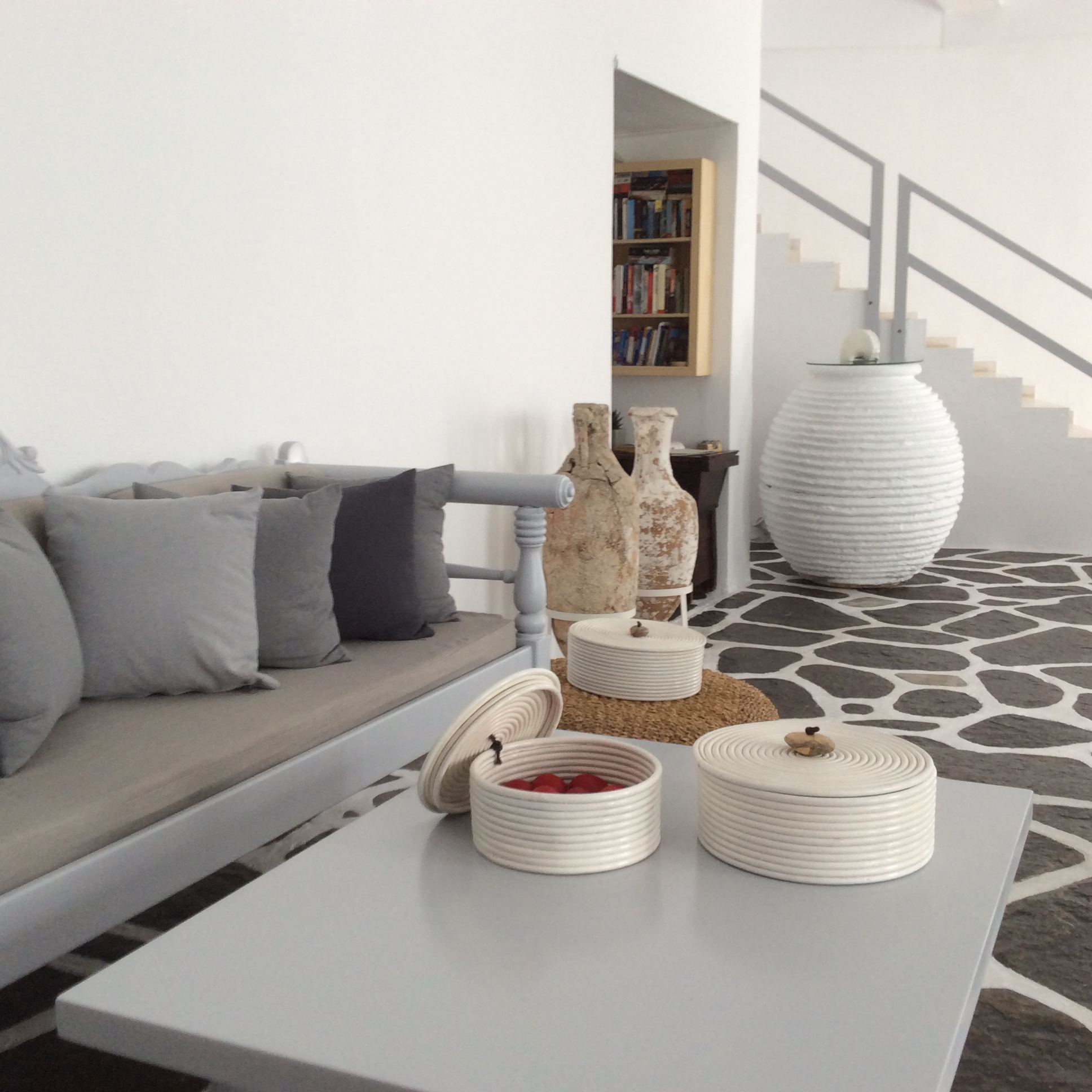
Paros is a beautiful island of beaches, archaeological ruins and former marble mines. It’s also the ferry hub for the Cyclades. Parikia is the capital of the small island. We have stayed at a small family run pension called the Argonauta. The Argonauta is a short stroll from the port where the ferries dock and at the entrance to the old town. In the morning the aroma from the bakery across the street insures that you’ll wake up with an appetite, and the breakfast the hotel serves will more than fill the bill. We stayed for five nights over Easter 2014, our fourth stay in the past ten years. With each stay we fall more in love with this small hotel. The rooms are up a marble staircase, surrounding a roof garden. It’s a pleasant place to sit and read or share a bottle of wine and chat with family and friends. The lobby is spacious and gives you the feeling of sitting in a traditional Cycladic style living room. Our room had a balcony overlooking the square where we could watch the comings and goings from the port, a refrigerator tucked into the armoire and a bed so comfortable I hated getting up in the mornings. This is not a big American chain hotel but a truly authentic Greek island home away from home. The family that owns the Argonauta has always responded to every question and request quickly and most helpfully. Their warmth is part of what keeps us returning to Paros.

The Lobby of the Argonauta (Photo by M. Corkery)

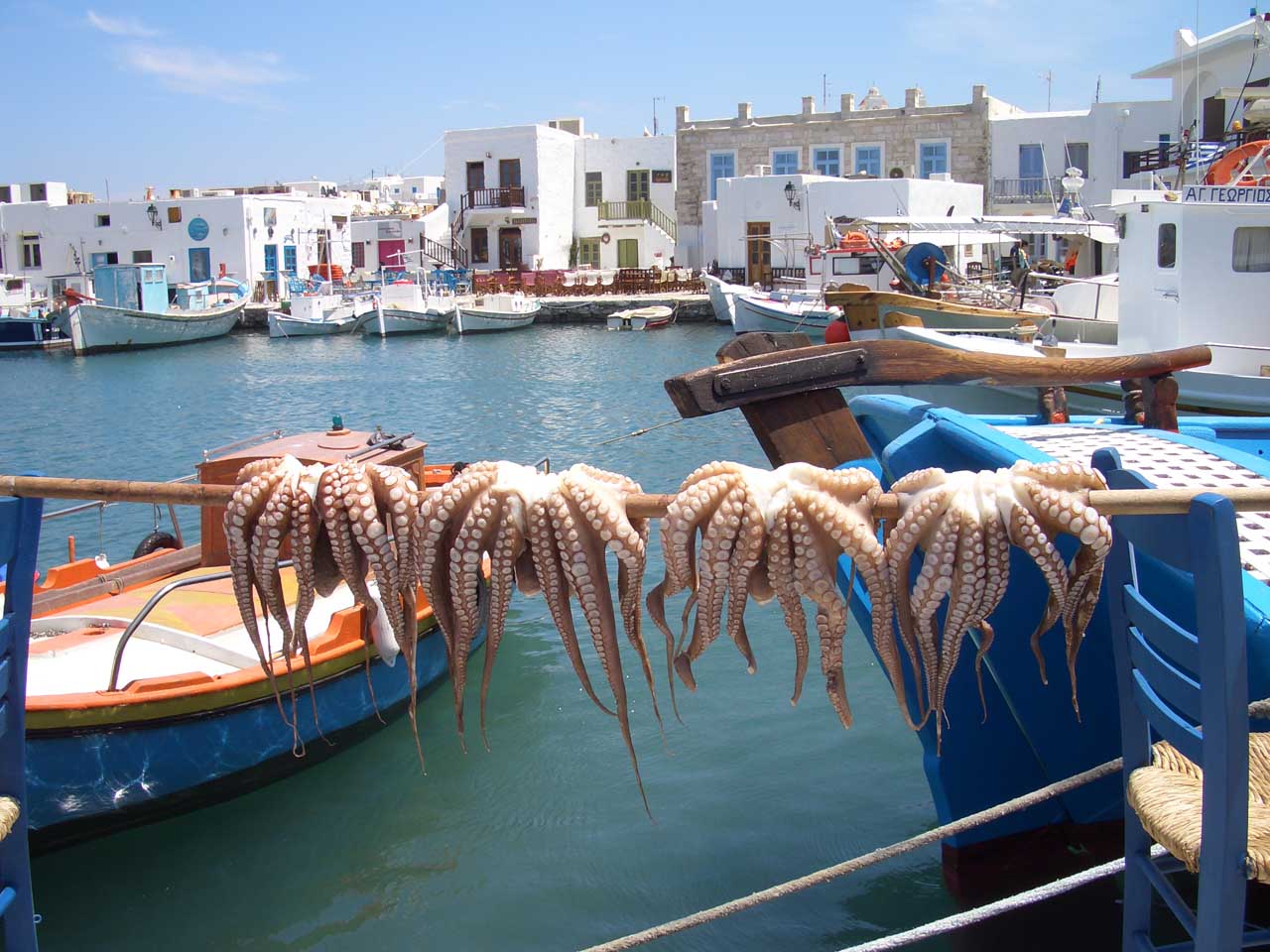
Octopus Drying in the Sun (Photo by M. Corkery)

The Beach at Magaya in the Evening (Photo by P. Corkery)

The Beach at Magaya in the Evening (Photo by P. Corkery)

In the center of Paros, Lefkes (Photo by P. Corkery)

In the center of Paros, the Town of Lefkes (Photo by P. Corkery)

Santorini

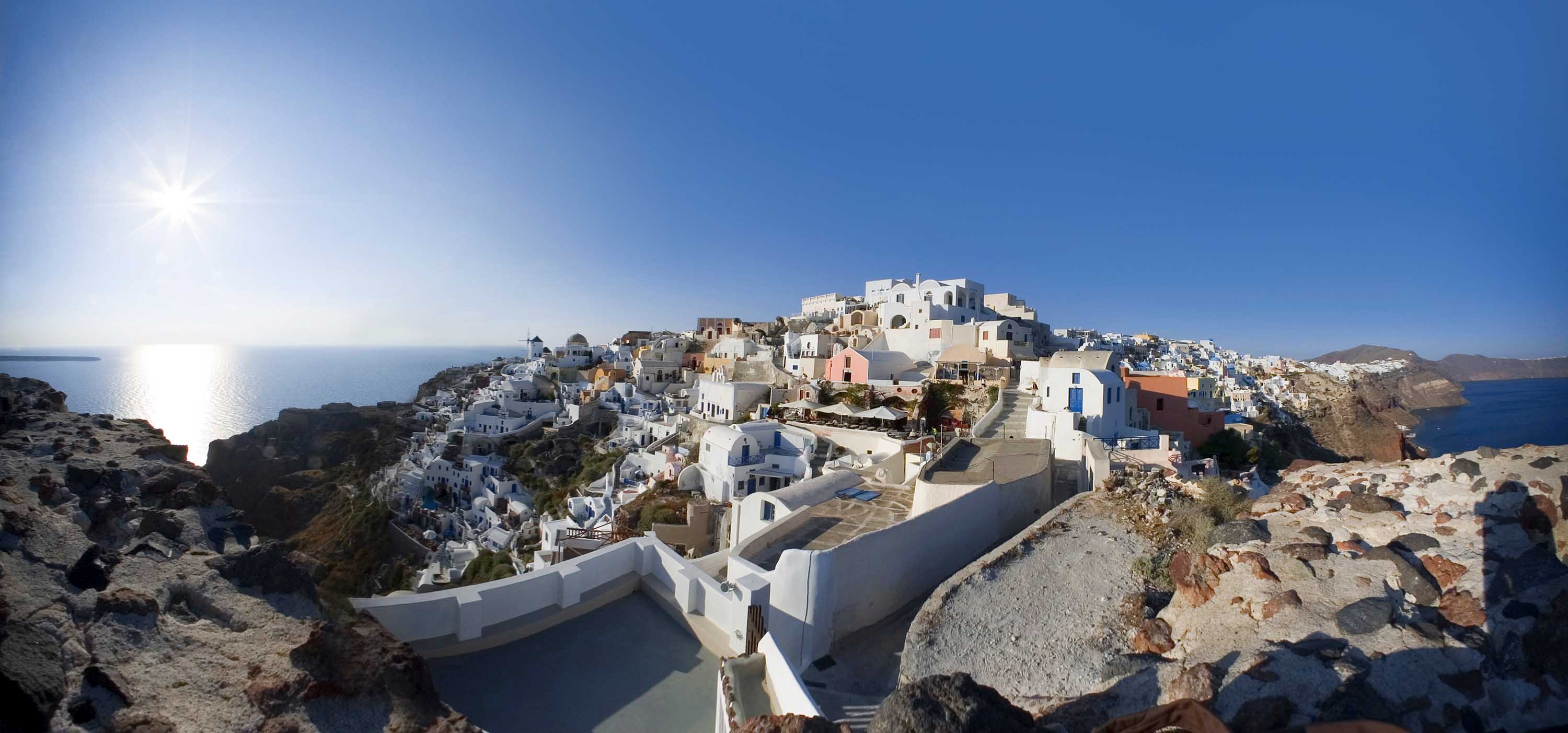
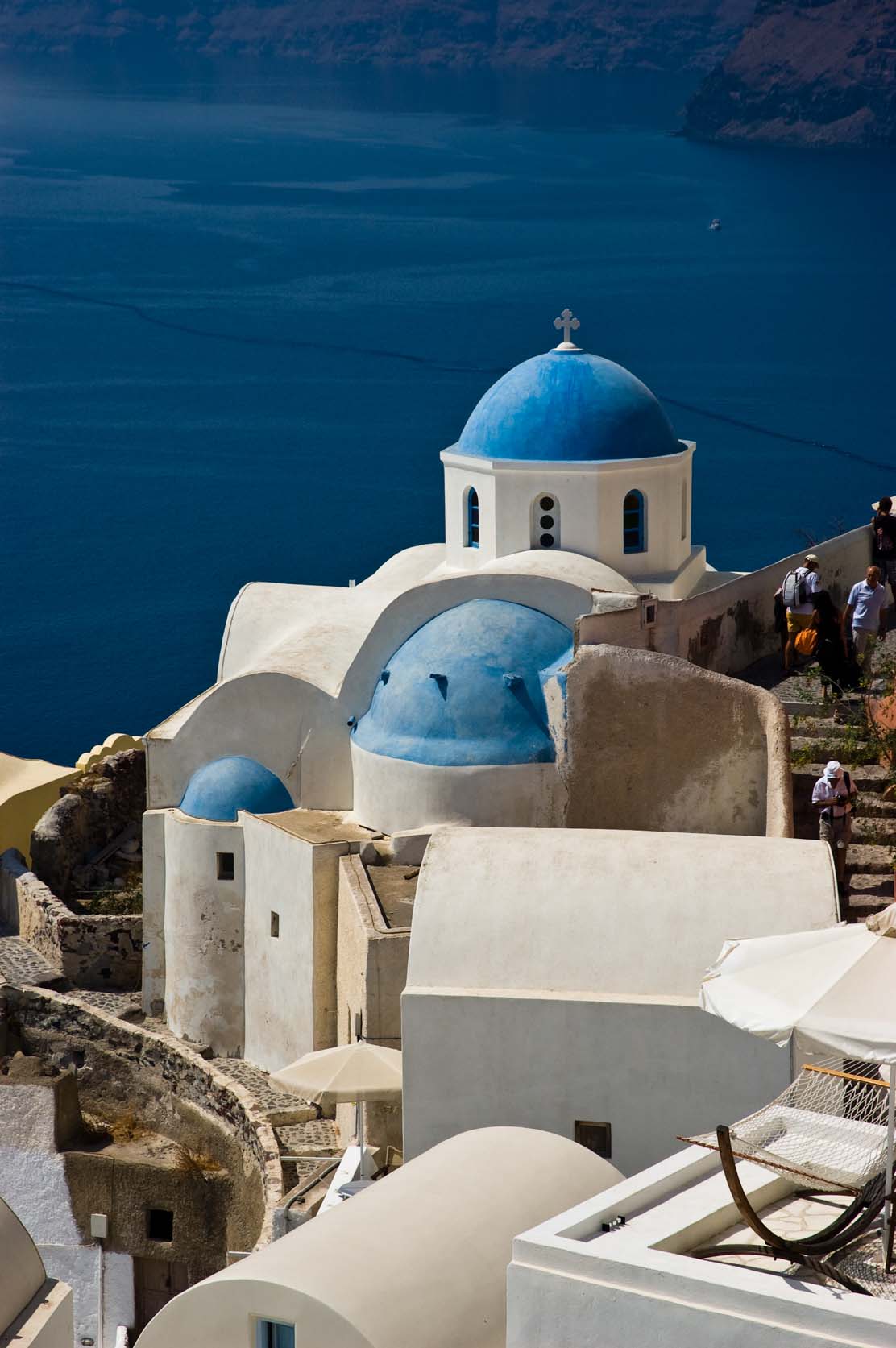
Santorini is possibly the most beautiful place on Earth. It is what remains after a large volcanic eruption destroyed an earlier civilization and is largely carved out of the caldera.

I would recommend that anyone visiting stay in Oia, as it has the most amazing views. You can choose between donkeys or steps to maneuver the steep inclines, just as breathtaking as the view.

A Panorama of Oia

A Panorama of Oia (Photo by P. Corkery)

Another View from Santorini

Another View from Santorini (Photo by P. Corkery)

Oia, Santorini (Photo by P. Corkery)

Oia, Santorini (Photo by P. Corkery)

Looking Down from our Terrace

Looking Down from our Terrace (Photo by M. Corkery)

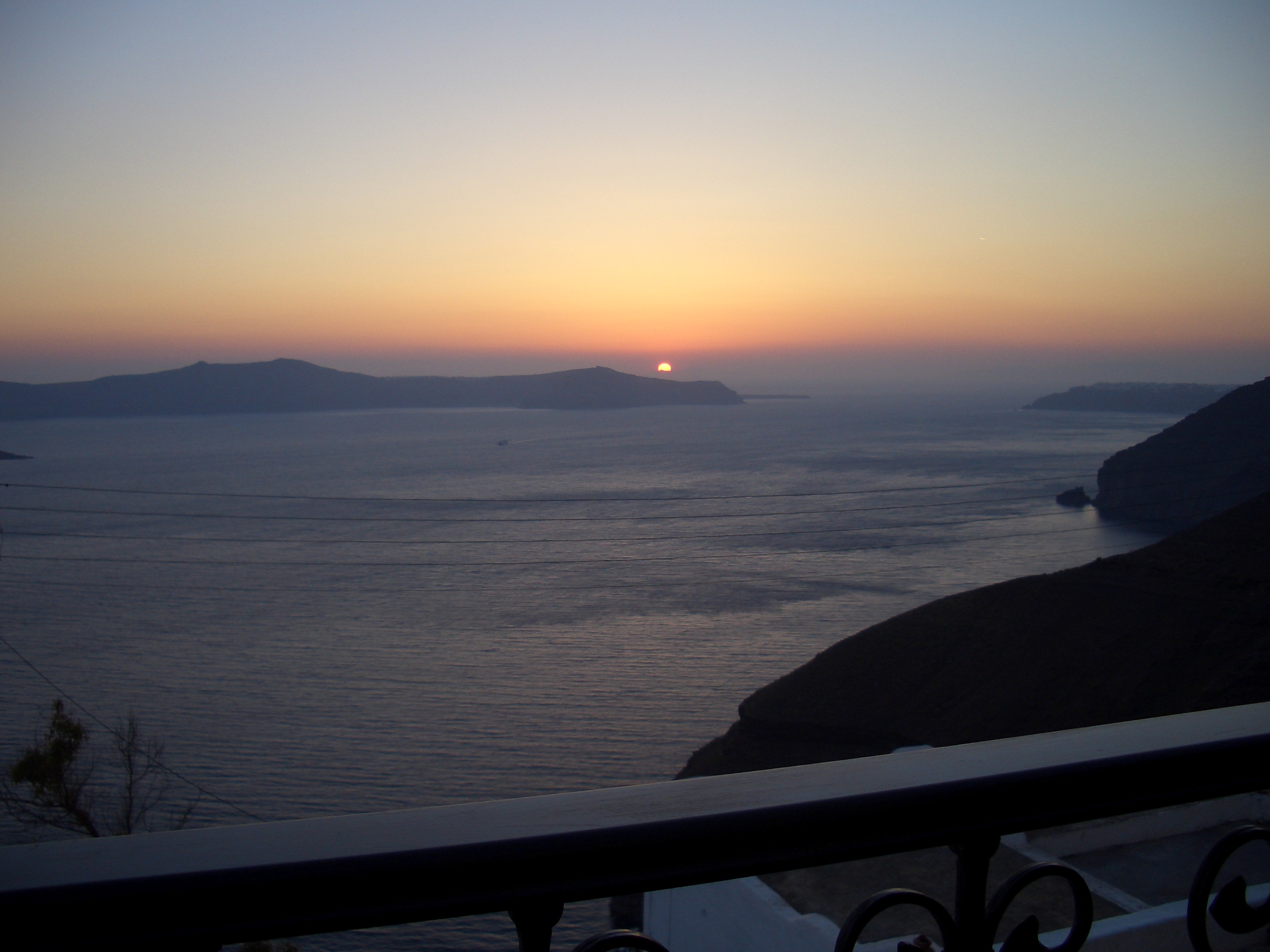
View from our Terrace in Fira, Santorini

View from our Terrace in Fira, Santorini at Sunset (Photo by M. Corkery)

Another View from Oia, Santorini (Photo by M. Corkery)

Another View from Oia, Santorini (Photo by M. Corkery)

Ephesus

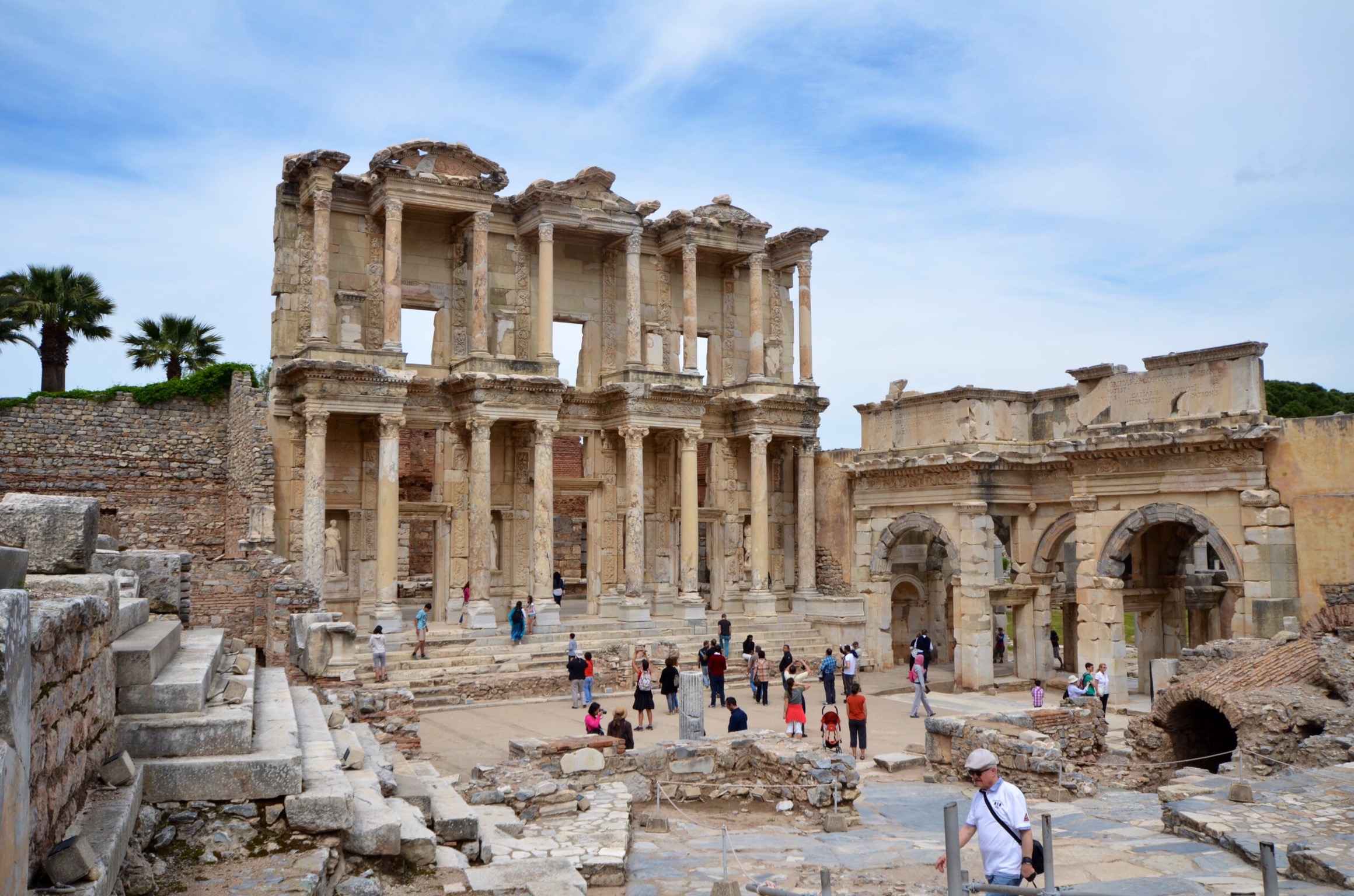
Library at Ephesus

Celsus Library at Ephesus    (Photo by P. Corkery)

If you’re going to Turkey, don’t stop at Istanbul. We hopped a flight on Pegasus Air and for less than $100 round trip flew into Izmir to begin our adventure. Ephesus is of Greek origin that later came under Roman influence before being taken over by the Turks in the 14th century. It was once a huge trade center of the ancient world. The temple to Artemis was located in Ephesus, one of the seven wonders of the ancient world, but it eventually became a strong seat for Christian worship. St. John established the first Christian community, and St. Paul spent some years preaching and gaining converts among the Ephesians. The port became silted in through the years and the magnificent buildings are now ruins much beloved by tourists from all over the world.

Where to Stay

Most travelers choose between Kusadasi and Selcuk when planning their journey. Kusadasi is a resort town on the Aegean coast where cruise ships dock, and it is about a 30 minute drive to Ephesus. Selcuk is only about two minutes away from Ephesus. Since we were traveling in April, and it was still too cold to enjoy the sea breezes, we decided to stay in Selcuk.

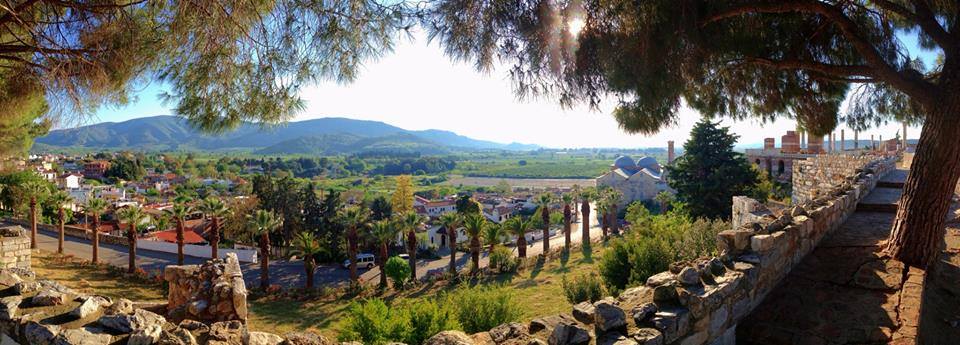
View from the Basilica of St. John's

View from the Basilica of St. John’s. In the Distance are the Ruins of the Temple of Artemis (Photo by P. Corkery)

Once Selcuk had been decided on I began researching hotels. You’re not going to find American style hotels in Selcuk, but you will find charming family run pensions. After looking at the various reviews we chose the Hotel Nazar. The Nazar is in the town center. They also offer a transfer service from the airport in Izmir. They are also only a short walk from St. John’s Basilica. Staying at Hotel Nazar provided us with the personal experience you always hope to find, but seldom do. Ilker, the owner, met us at the airport in Izmir and chatted with us until his father, a charming man of Greek heritage, drove us to Selcuk, where we were greeted by the owner’s mother in law, a lovely French woman. We had the most amazing dinner of our three-week vacation that evening on the rooftop restaurant, a traditional Turkish meal cooked by one of the local women. 

We were the only guests that night and reveled in their undivided attention. Breakfast is also served on the rooftop terrace. Every morning we were served fresh juice, tea, an assortment of cheeses, fruit, yogurt and bread.

The hotel arranged a taxi driver, Tolga, to pick us up the next day. He drove us to the House of the Virgin Mary, where he waited for us, and then to the upper gate of Ephesus. We met him three hours later at the bottom gate, drove us all around, and regaled us with stories, histories, and myths, all for the equivalent of $50 U.S. dollars.
Hotel Nazar is a traditional Turkish abode, beautifully decorated, spacious, charming, and delightful. Everyone at the hotel were warm and welcoming. They seemed eager to get to know us and make sure our stay in Selcuk was a top experience. And, it was. I would definitely stay here if and when I return.

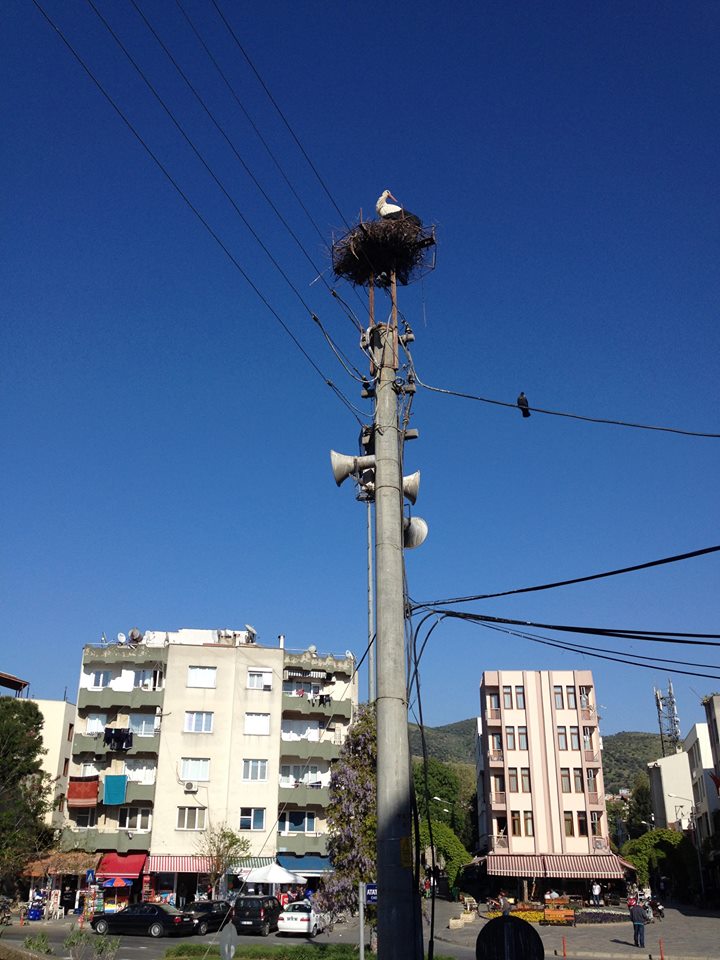
One of the Many Nesting Storks of Selcuk

One of the Many Nesting Storks of Selcuk (Photo by P. Corkery)

Travel to From and Within

We flew Pegasus Air out of Istanbul to Izmir, the nearest airport to Ephesus. The flight lasted less than an hour and was easy for two non Turkish-speaking visitors to manage. Ephesus is about an hour away by road, and public transportation is available. Turkey also has a system of small busses called dolmas. They are marked with their destination, reasonably priced, and take off once they are filled. The majority of signs are written in Turkish and English, which makes finding your way around easy.

Must Sees

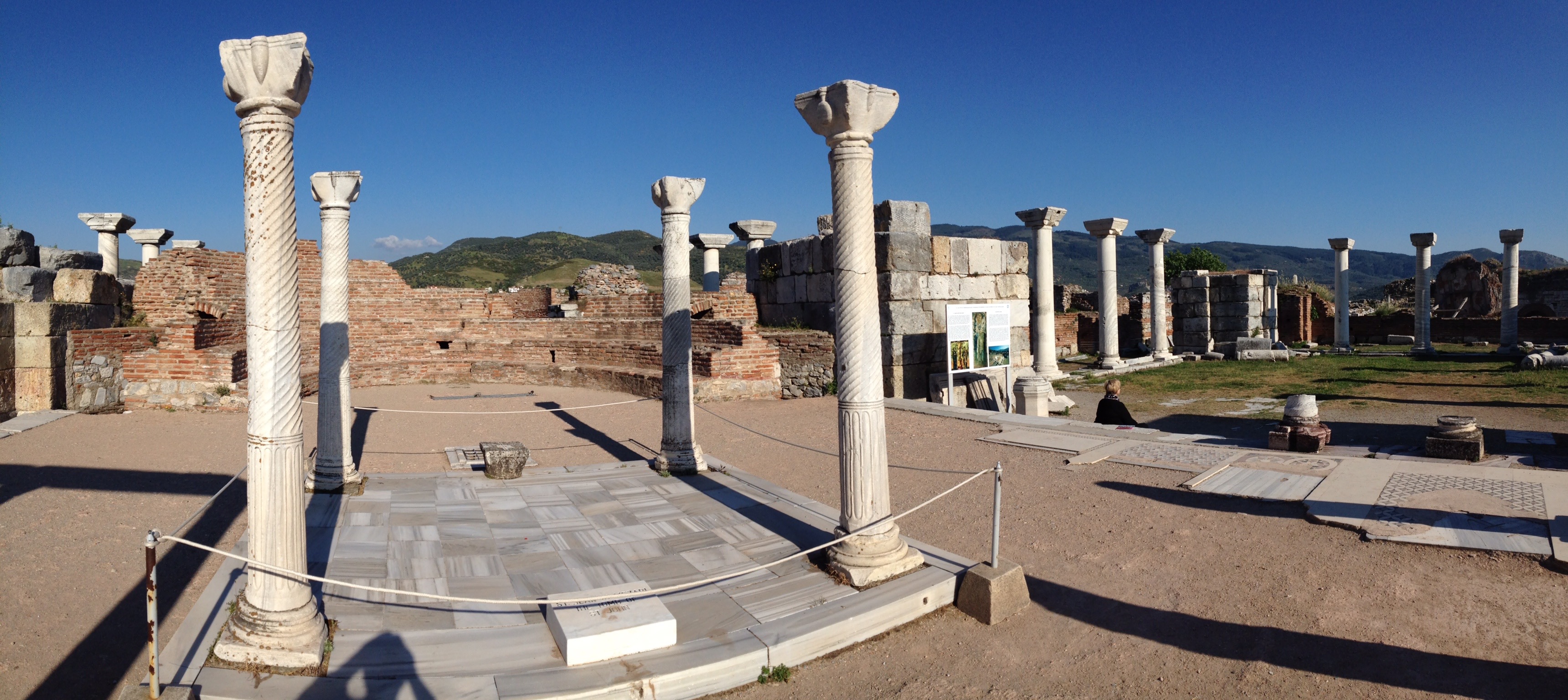
St. John's Basilica

St. John’s Basilica (Photo by P. Corkery)

St. John’s Basilica was built in the 6th century by the Emperor Justinian. It’s said to be the burial spot for the beloved Apostle John. Many that travel to Ephesus miss these amazing ruins, as they are located within Selcuk. We strolled over from the Hotel Nazar one evening before they closed. There were only a handful of visitors.

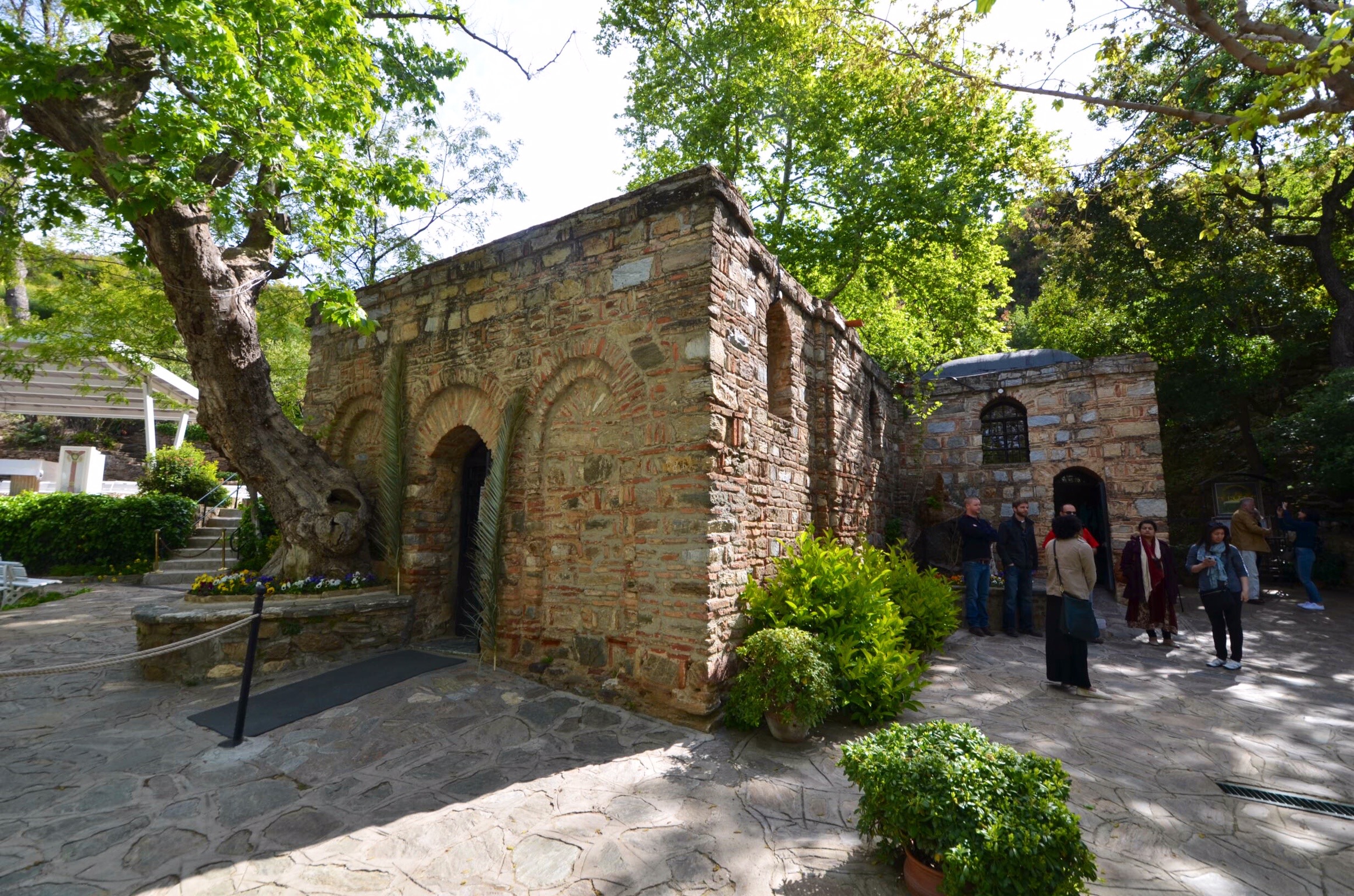
House of the Virgin Mary

House of the Virgin Mary (Photo by P. Corkery)

Meryem ana, Virgin Mary, is beloved in Turkey. This is said to be her final home and that she came to the area with St. John. I’m not certain any of that is true, but there is a feeling of peace and miracles within these walls. The house is on a hill away from Ephesus. It was important to me to spend time there, so we had Tolga our guide drop us off for a visit. As you enter the area the kiosks lining the walkway sell religious icons, spices, and fabrics.

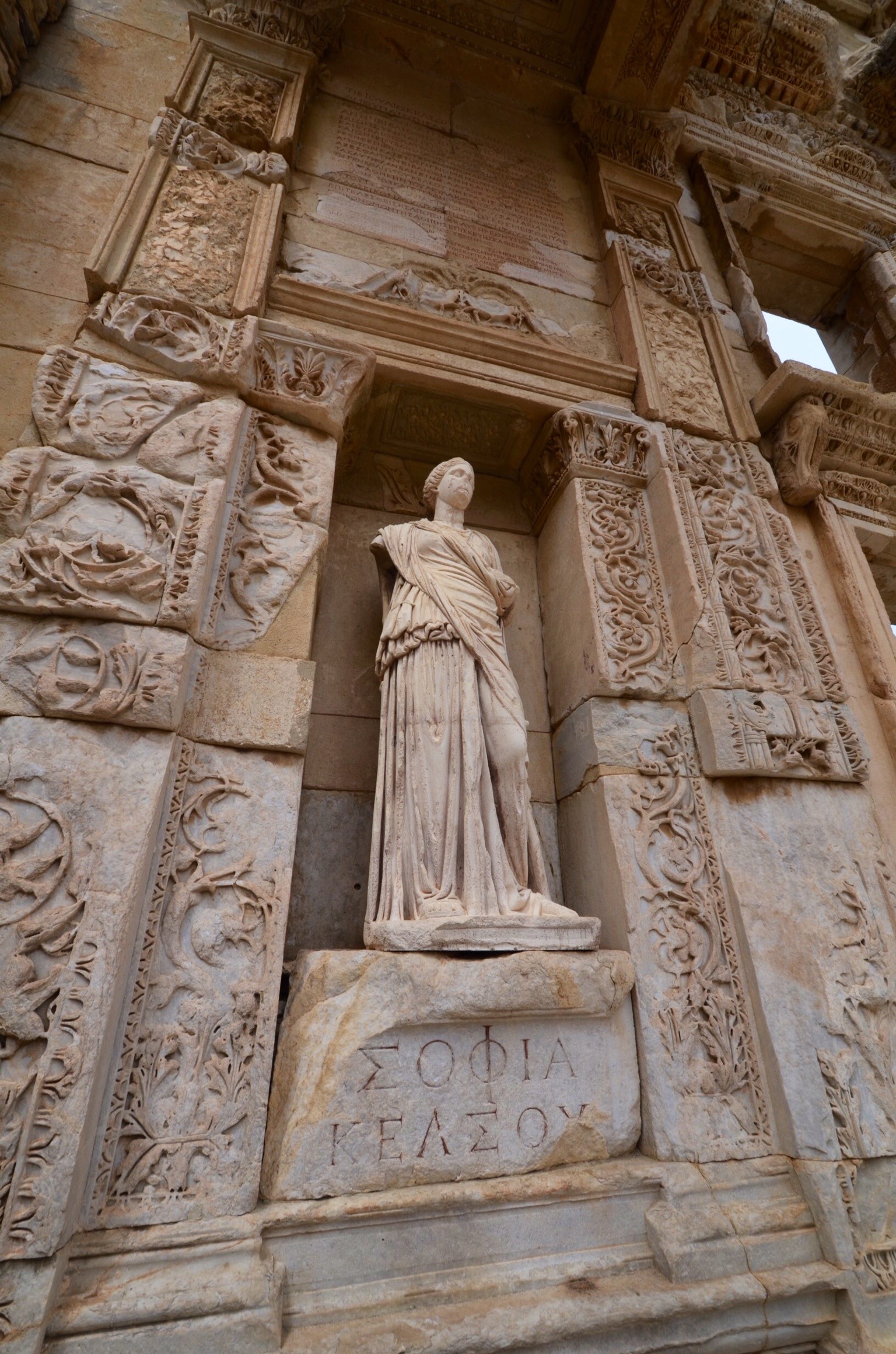
Wisdom at the Celsus Library

Wisdom at the Celsus Library (Photo by P. Corkery)

This is a carving of Wisdom from the wall at the Celsus Library. The library was built during the Roman era of Ephesus and was built to honor the Roman Senator Tiberius Julius Celsus Polemaeanus, who was buried underneath. It was finished in 135 A.D.

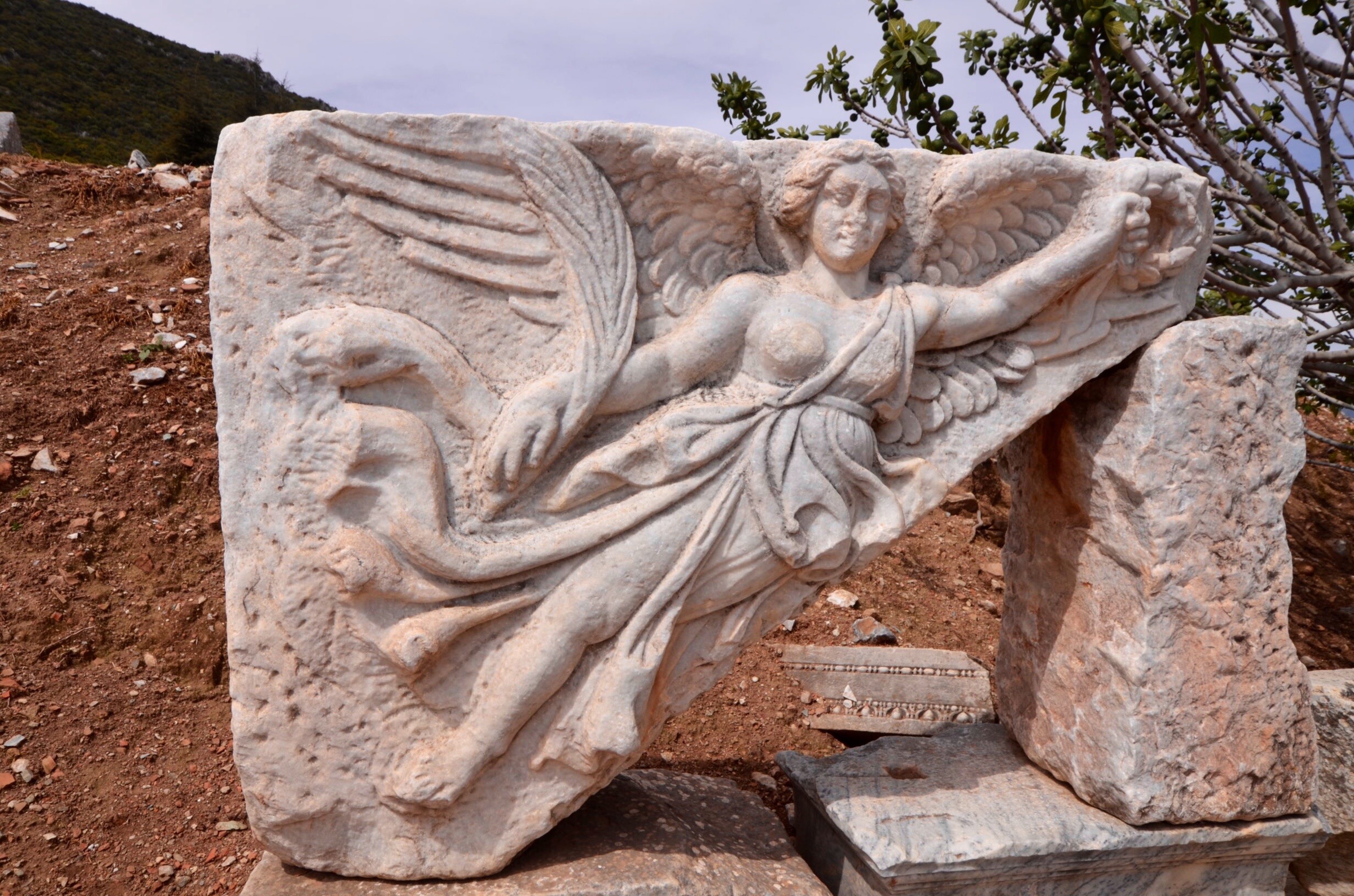
Nike the Goddess of Victory at Ephesus

Nike the Goddess of Victory at Ephesus (Photo by P. Corkery)

Nike is the Greek Goddess of Victory. She is known as Victoria in the language of Roman gods and goddesses. In her left hand is the wreath of glory. Nike flies around battlefields bringing victory to those who are deserving.

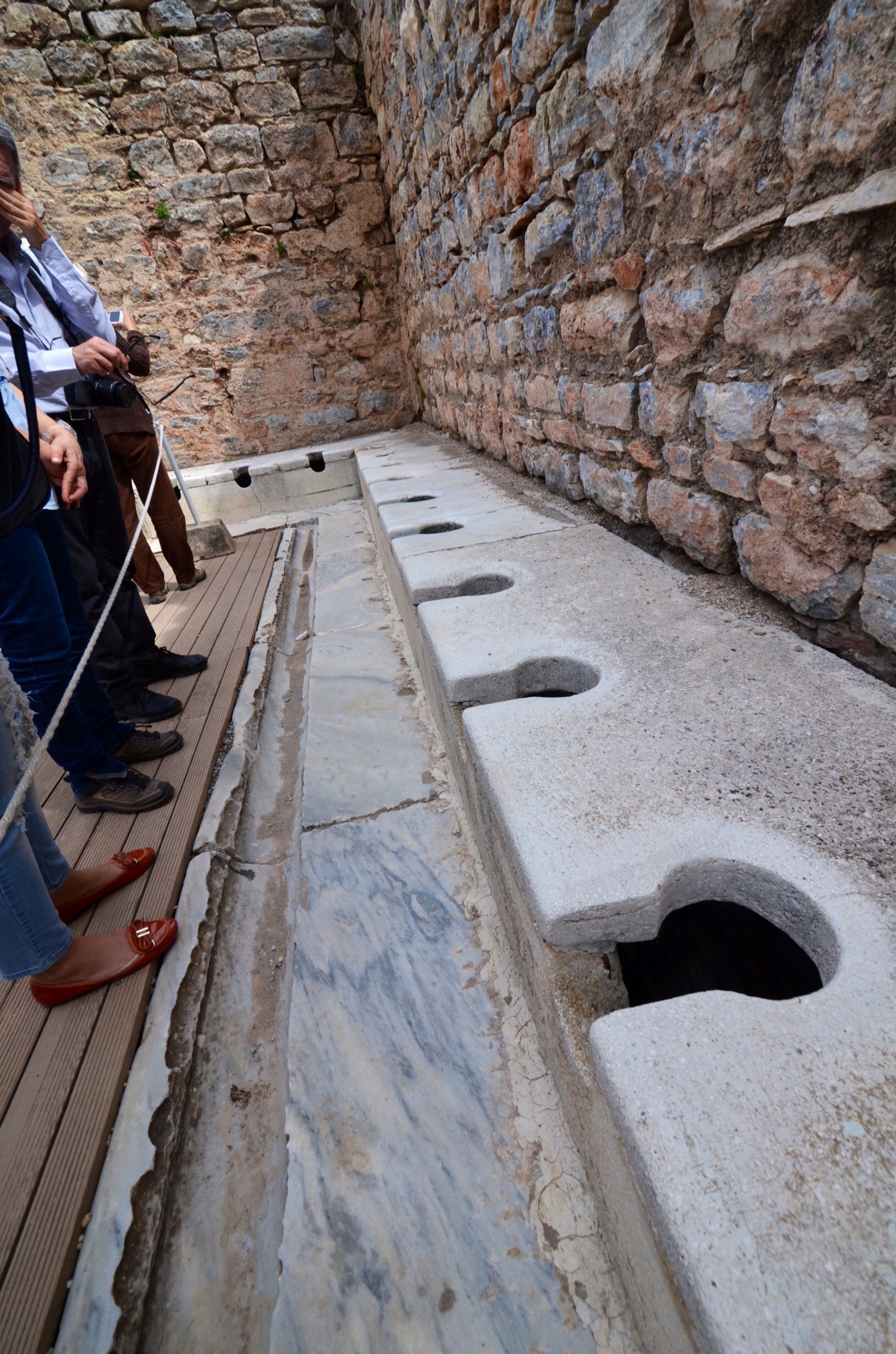
Public Bathroom

Public Bathroom (Photo by P. Corkery)

These are the municipal bathrooms in Ephesus. The seats were made of marble and situated over a series of deep troughs. A trough of clean water ran by your feet so you could dampen a sponge on the end of a stick to clean yourself after using the toilet. A small orchestra often played nearby to mask the sounds.

Ephesian Cat

Ephesian Cat (Photo by P. Corkery)

This cat seemed to be just as popular with photographers the day we visited as any of the ruins.

Dinner at a Street Taverna

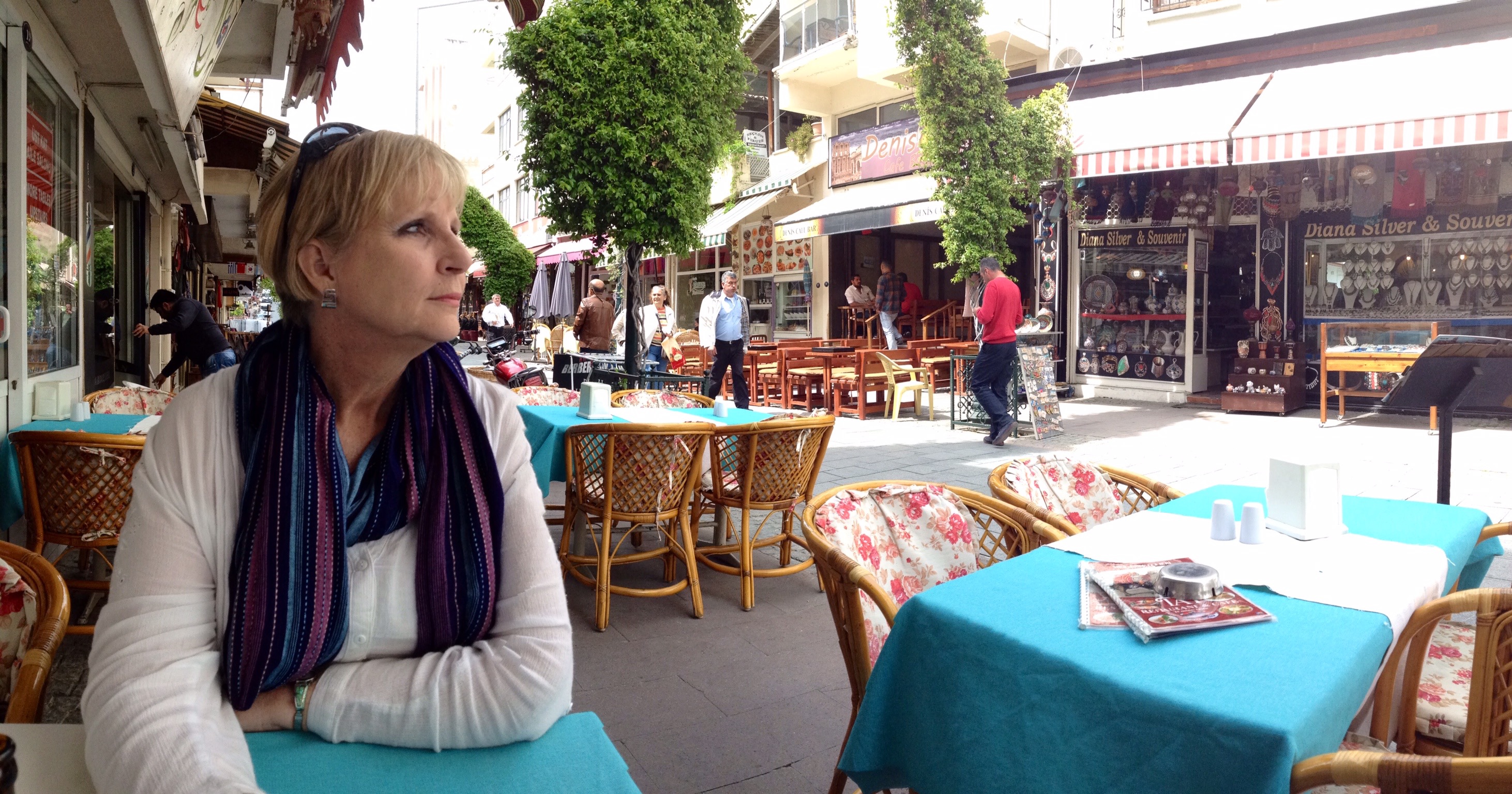
Dinner at a Street Taverna in Selcuk

Istanbul

The Hagia Sophia (Photo by P. Corkery)

Istanbul is a fascinating city of incredible beauty. For many, it’s the gateway to Turkey and a western friendly introduction to Islam and the Islamic world.

Istanbul straddles two continents, Europe and Asia, and prides itself on being secular. Some women wear varying degrees of head covers, but the majority do not. I did find it convenient to wear a light eternity scarf during sightseeing, which I could easily cover my hair with when we popped into a mosque where proper dress is mandatory (more on that further down the page).

Istanbul is a city of steps and hills that can be very tiring. If you take your time, though, the added exercise will be well worth the pain. Public transportation is easily accessible and modern. When choosing your hotel keep its proximity to the nearest underground, tram, or bus in mind. You should also bear in mind that walking distance to a European , who walks everywhere, is quite different than walking distance to most Americans. I personally don’t think one mile uphill is walking distance.  It’s more of an endurance distance.

Don’t let Syria’s border with Turkey keep you from visiting.  Istanbul is 940 miles, 1,514 km, and 17.25 hours, in other words quite a distance from the contentious Syrian border.

Where to Stay

There are different areas to choose from when searching for a hotel in Istanbul.  The area near Taksim Square is vibrant and bohemian. Taksim Square is the hub for all transportation, which made it a good choice for us. I would also recommend the Sultanahmet area because it is in the midst of the historic sites you’ll wish to see.

We stayed at the Suiteness Taksim for four nights in April and were very happy with the location, the charm, the staff, and especially the size of our room. We were given a large suite on the back of the hotel away from the noise of the street. There was a club nearby,  and we would blissfully drop off to sleep listening to the jazz drifting through our open window.

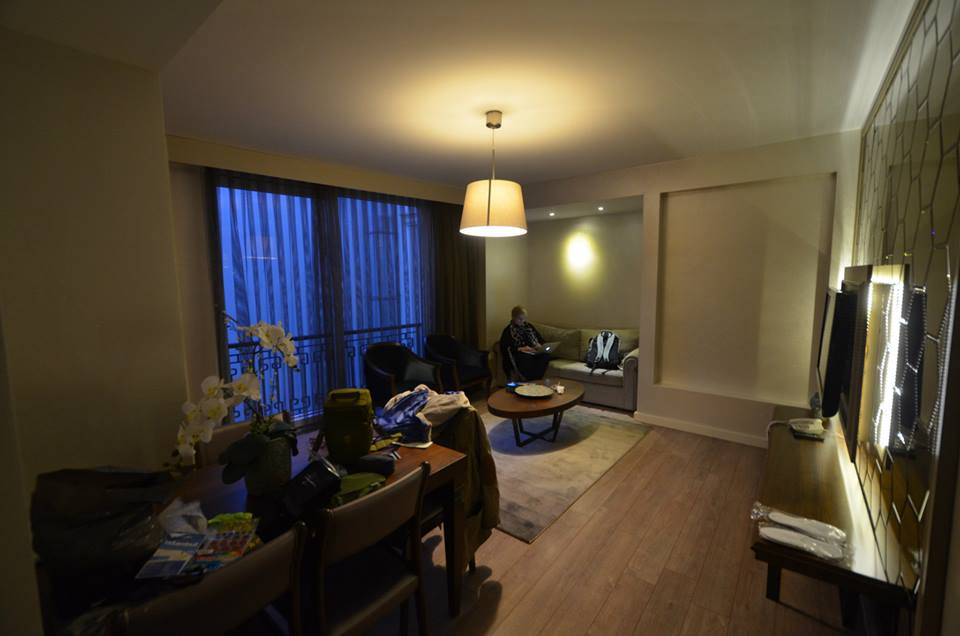
The living room area of our suite was comfortable and spacious with a small kitchenette off to the side that could be hidden behind doors. The bathroom was large and modern. The bedroom had a large closet with drawers and a comfortable large bed. The suite was everything you could hope for.
taksim suitness

The living area of our suite

Breakfast was a buffet with a large selection in a pleasant area. It’s a typical European style breakfast, which some Americans might find strange, but it was good and healthy. The staff at reception was very helpful with directions and ideas.

After long hours of walking, climbing, and sight seeing, our hotel was a welcome respite at the end of the day. We loved the charming neighborhood where the hotel was located. It’s bohemian with many expats living in the area. There were many places to eat within a short walk as well as places to shop. It was just a short walk to Taksim Square, the transportation hub. We easily traversed the city using the metro, trams, and funicular.

The hotel might be difficult to find on your own the first time, but we took advantage of the transfer service they offered both coming and leaving the hotel, and would recommend it to other travelers as well.

It was reasonably priced.  I would definitely stay there again.

Travel To From and Within

It’s a long flight to Istanbul. I’ve found that if I am traveling great distances it works better to break the trip up. I flew into London and spent a couple nights adjusting to the time change and getting my legs under me. When I did leave for Turkey, it was only a four hour flight and I arrived feeling fresh.

Before you leave for Istanbul, apply on line for your visa at http://istanbul.usconsulate.gov/tourist_visa.html. It will save you money and time. The lines at the airport in Istanbul to access passport control are long and require patience. If this is your first trip I recommend staying at a hotel that offers transportation to save confusion.

Public transportation is very doable for English speaking visitors. Throughout most of Europe you will find signs in both English and the local language, Turkey is no different. Taksim Square is the hub for all local travel. The major bus terminal is there as well as access to the underground railroad. There is also the funicular that will take you up and down the hill. We never took a bus, but did avail ourselves of the metro, funicular and trams. Traffic is intense in Istanbul and this is the quickest way to get around. If you’re traveling during rush hour, keep in mind that the Turks have a different definition of personal space than most Americans. I found a recent refugee from Syria using me to hold himself up. As I stepped aside, he found himself lurching into other passengers (insert giggle).

If you’re traveling to other parts of Turkey there are many airlines to choose from. These will be short flights and preferable to long bus rides across the country. I recommend purchasing tickets before you go. I use http://www.kayak.com as it searches through multiple sites.

A Few Must Sees

The Sufi Whirling Dervishes of Istanbul.

They are followers of Rumi who pray/meditate by whirling. One hand is palm up to bring in blessings from God. The hand that is palm down brings the blessings to Earth and all who dwell there. In the words of Rumi, “If light is in your heart, you will find your way home.”
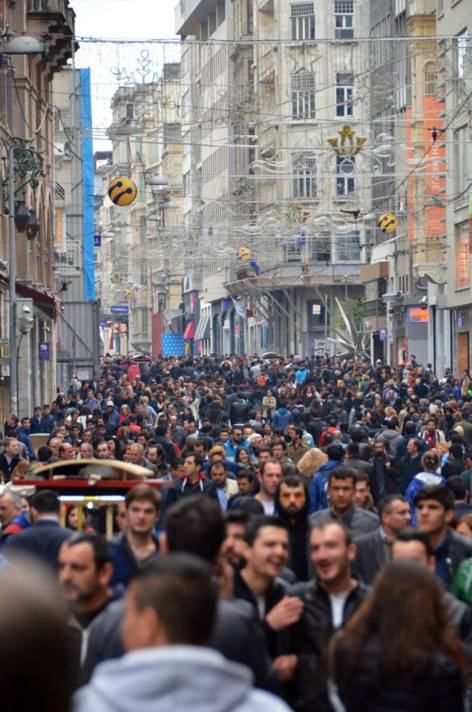
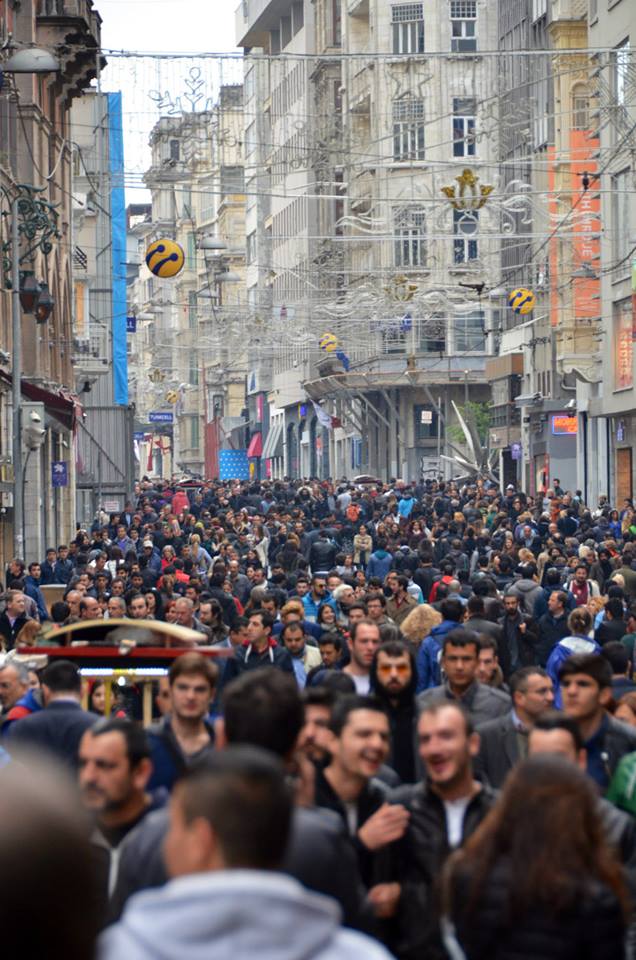
Istakial Caddessi Major Shopping Street (Photo by P. Corkery)

Istakial caddessi (Photo by P. Corkery)

This street leads from Taksim Square and is popular with locals and tourists both. This is where to go to taste the local street foods: Simit (baked dough dipped in molasses and encrusted with sesame seeds – my favorite), Midye dolma (mussels served on the half shell), Ciğ Köfte (once made with raw meat, it is now a spicy spread made of fine bulgur, tomatoes, and red pepper paste served as a wrap), Dondurma (Turkish ice cream served with a street show due to its gum like qualities), hamburgers and more. There are many nice restaurants in this area and the shopping is topnotch. There is a nostalgic tram that runs dow the length of the street but more crowded than any San Francisco street car.
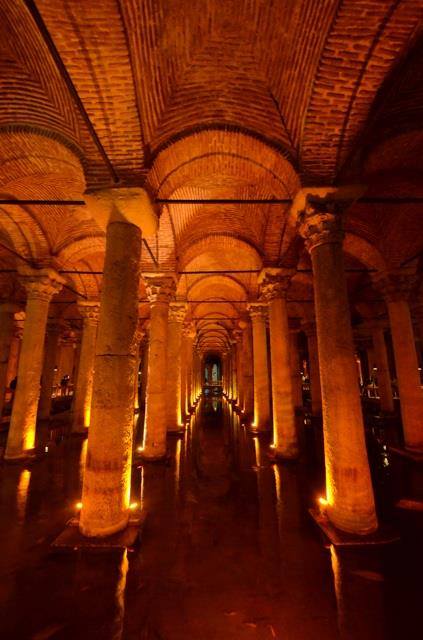
Bascilica Cistern

Bascilica Cistern (Photo by P. Corkery)

During the 6th century and the reign of Justinian, many cisterns were built beneath Istanbul (Constantinople). This one was built to store water for the great palace, but when the emperors left it was forgotten. The cisterns were rediscovered in the 1500s when home owners were catching fish in their basements. The water is full of coy that never see daylight.
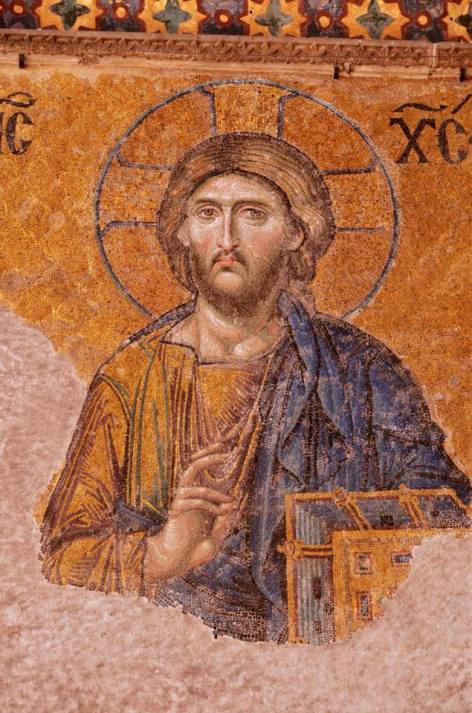
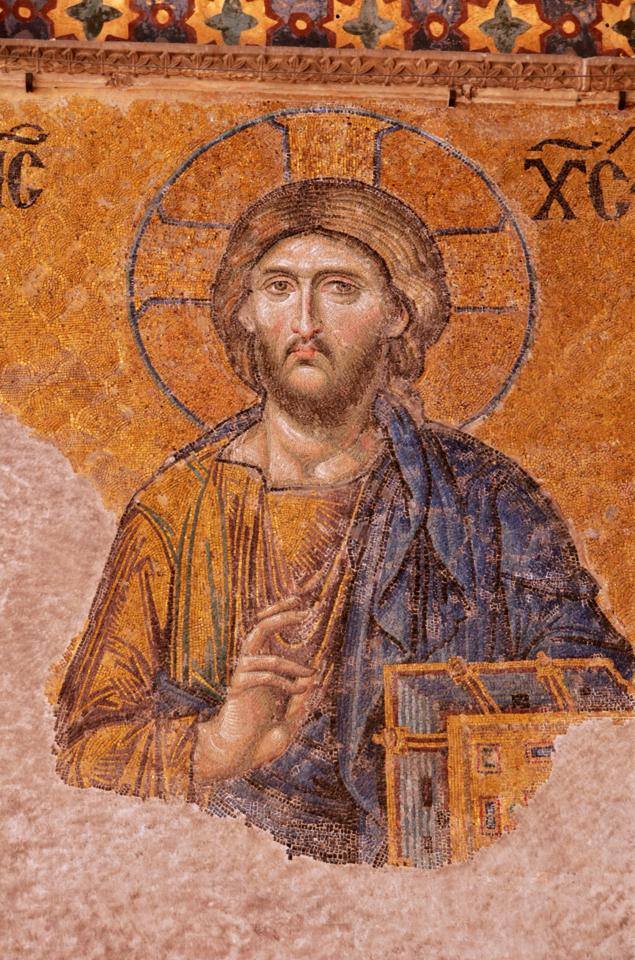
Mosaic from inside the Hagia Sophia

Mosaic from inside the Hagia Sophia (Photo by P. Corkery)

The Hagia Sophia was built as a Greek Orthodox basilica, resplendent with beautiful golden icons and mosaics. It was later converted into a mosque, all the mosaics were plastered over, and the position of the altar was moved to face towards Mecca. It is now a museum highlighting both the Christian and Islamic elements.

Visiting a Mosque

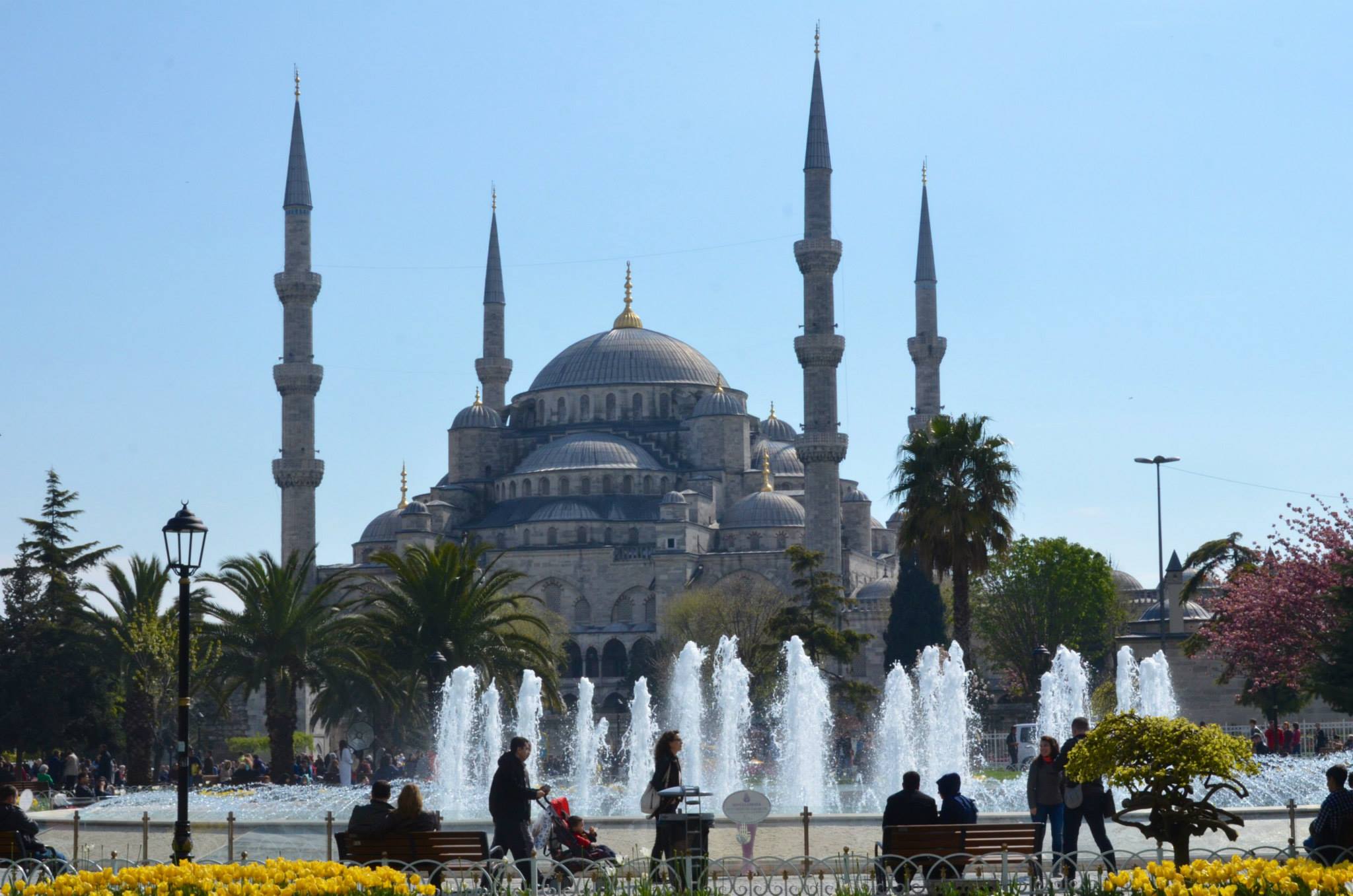
Before entering the Mosque, you must remove your shoes. The Blue Mosque offers plastic bags just for that purpose. Women must be dressed modestly with a hair covering. If you forgot to dress conservatively or left your scarf in your room, the Blue Mosque has women that will give you a scarf and swath you in a robe. It’s much more preferable to dress yourself.
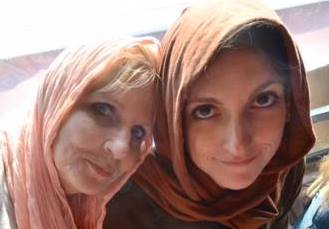
scarf

Ready to Visit the Blue Mosque (Photo by P. Corkery)